
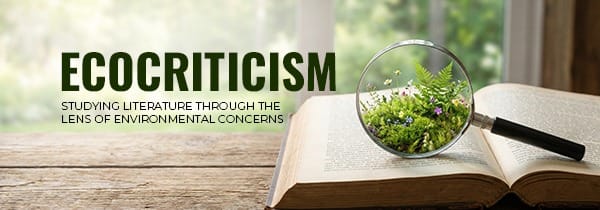
Ecocriticism is the study of literature and ecology from an interdisciplinary point of view that explores the relationship between humans and the physical environment through literature and other cultural forms. Here, literary scholars analyze texts that illustrate environmental concerns and examine the various ways literature treats the subject of nature. Emerging in the 1990s, this field links together literature and ecology in an inquiry into how storytelling forms our views of the natural world and of its most significant environmental concerns. Ecocriticism, as a movement, began with the publication of Rachel Carson’s ‘Silent Spring’ in 1962, where it investigated and criticized the use of pesticides in farming and the ways in which they can inherently damage the environment. Analyzing texts through an environmental lens makes ecocriticism urge readers to consider how narratives reflect, influence, and shape cultural attitudes towards nature.
The term ‘Literary Ecology’ was first coined by Joseph Meeker in his book ‘The Comedy of Survival,’ published in 1972, while the term ‘ecocriticism’ was first used by William Rueckert in his essay, ‘Literature and Ecology: An Experiment in Ecocriticism,’ in 1978.
By challenging the classical anthropocentric view of things, ecocriticism questions human-centric views that dominate literature. It emphasizes the correlation of all life forms, inviting readers to reconsider the value and agency of non-human entities and also address ecological challenges such as climate change, deforestation, and species extinction by questioning human responsibility towards nature. In today’s world, where environmental crises are becoming increasingly critical, ecocriticism plays a vital role in advocating environmental awareness and encouraging sustainable practices. Engaging with literature through this lens is not just a means of exploring creative expressions but also an urge to reflect on the real-world environmental issues that shape our lives. In the final analysis, ecocriticism serves as a device for both understanding literature and fostering a deeper, more ethical relationship with the environment.