Admission Enquiry

Skip to main content
search
All Posts By

Eldho Joy

At ST PAULS COLLEGE, our approach to Literary Theory introduces students to the recent developments that challenge the traditional readings of select narratives. From post structuralism and eco-criticism to digital humanities, we encourage our students to explore varied lenses for comprehending literature.

Literary Theory: Recent Developments in Theoretical Approaches

By English

Literary Theory has progressed into a field that bridges literature with philosophy, culture, and social sciences. At ST PAULS COLLEGE, our approach to Literary Theory introduces students to the recent developments that challenge the traditional readings of select narratives. From post-structuralism and ecocriticism to digital humanities, we encourage our students to explore varied lenses for comprehending literature. This course highlights the application of contemporary theories like post-humanism, affect theory, trauma theory, and intersectionality, making students proficient at analyzing narratives in today’s dynamic contexts.

The course combines classroom discussions and textual analysis as well as interdisciplinary approaches to research. Whether the students are drawn to the philosophical convolutions of Derrida, the social critique of Foucault, or even the environmental perspectives of eco critics, this course ensures that they are equipped with the methodologies and tools to think critically and innovatively about literature and its existing connection to the contemporary world. Students are also encouraged to critically engage with the meaning and interpretation, aiding them in enhancing their analytical and interpretive skills. The course also explores how technology, as well as globalization, influences literary discourse, preparing students for academic and professional growth. Thus, students emerge with a better understanding of the role of theory in shaping literary relevance to contemporary challenges.

World Literature: Comparative Studies of Literature from Different Cultures

In a world that is connected by shared stories yet shaped by unique traditions, studying World Literature provides a gateway to decipher diverse cultures. At ST PAULS COLLEGE, our course on World Literature bridges the local to the global, studying select narratives from various regions, including Latin America, Africa, Europe, and Asia. Students delve deep into comparative analyses, discussing themes like exile, identity, diaspora, and resistance through global lenses. We encourage students to trace the complex threads that connect works like Chinua Achebe’s Things Fall Apart to those of Gabriel Garcia Marquez’s magical realism or the poetic traditions of Rumi and Rabindranath Tagore.

With an emphasis on intercultural dialogue, this course enables a deeper appreciation of humanity’s shared narratives while also celebrating cultural specificity. Through rich classroom discussions, textual analysis, and creative assignments, students also discover the universality of human experiences amid cultural diversity. The course also includes media resources as well as translation studies to render a holistic approach to global narratives. Graduates of this course would carry forward a profound and deep appreciation for cultural empathy as well as the power of storytelling to transcend borders.

The role of mindfulness in mental health is more critical today than ever before. It offers us a way to reclaim our lives from the "autopilot" of stress. While it is not a panacea for all psychological ailments, mindfulness offers a robust, scientifically validated framework for improving emotional health and fostering deep self-compassion.

The Role of Mindfulness in Contemporary Mental Health: A Clinical and Practical Perspective

By Psychology

In the contemporary era, characterized by rapid digital transformation and constant connectivity, the prevalence of anxiety and stress-related disorders has reached unprecedented levels. Many of us feel this daily—the relentless pull of a notification, the weight of an overflowing inbox, and the exhaustion of being “always on.” The World Health Organization has increasingly highlighted the global burden of mental health conditions, prompting a search for sustainable, non-pharmacological interventions. Among these, mindfulness—a practice rooted in ancient contemplative traditions—has emerged as a premier, evidence-based strategy for enhancing psychological resilience. This article explores the role of mindfulness in modern mental health, its neurological underpinnings, and its application within the context of current societal trends.

Defining Mindfulness in a Modern Context

Mindfulness is often misunderstood as an attempt to “empty the mind.” In reality, it is defined as the psychological process of bringing one’s attention to experiences occurring in the present moment, which can be developed through the practice of meditation and other training (Kabat-Zinn, 2003). Imagine it not as a battle with your thoughts, but as a gentle turning of the head to look at what is happening right now, without the need to fix or change it.

In the current “attention economy,” where digital notifications and multitasking are the norms, mindfulness serves as an essential counter-mechanism. It involves two primary components: the self-regulation of attention so that it is maintained on immediate experience, and adopting a particular orientation toward one’s experiences that is characterized by curiosity, openness, and acceptance (Bishop et al., 2004).

The Trend of Digital Burnout and the Human Response

A significant trend in 2024 and 2025 is the rise of “digital burnout.” As remote work becomes a permanent fixture for many, the boundaries between professional and personal lives have blurred. We often find ourselves physically present at the dinner table while mentally stuck in a stressful email thread from three hours ago. This constant state of being “on” has led to cognitive fatigue and decreased emotional regulation.

Mindfulness addresses digital burnout by promoting “intentional presence.” By practicing mindfulness, individuals can develop a higher degree of metacognitive awareness—the ability to monitor their own thoughts and feelings as if they were an outside observer. This awareness allows individuals to recognize the early signs of burnout, such as irritability or lack of focus, and implement self-care strategies before a clinical crisis occurs. Recent studies suggest that even brief daily mindfulness interventions can significantly reduce perceived stress among high-pressure professionals (Hofmann & GĂłmez, 2017).

Neurological Foundations: Healing the “Alarmed” Brain

The efficacy of mindfulness is not merely subjective; it is supported by significant neurobiological evidence. When we feel overwhelmed, our brains are physically reacting to perceived threats. Research using functional Magnetic Resonance Imaging (fMRI) has demonstrated that regular mindfulness practice leads to structural and functional changes in the brain, a phenomenon known as neuroplasticity.

1. Quieting the Amygdala

The amygdala is the brain’s “alarm system,” responsible for the fight-or-flight response. In individuals with chronic anxiety, this alarm is essentially “stuck” in the on position. Mindfulness has been shown to decrease gray-matter density in the amygdala, effectively “turning down the volume” on the stress response (Goleman & Davidson, 2017).

2. Strengthening the Reflective Self

Conversely, mindfulness increases activity in the prefrontal cortex, the area associated with executive function and emotional regulation. This is the part of us that can take a deep breath and say, “I am stressed, but I am safe.” This shift from the “reactive” amygdala to the “reflective” prefrontal cortex allows individuals to respond to life’s stressors with greater equanimity and grace.

Clinical Applications: Breaking the Cycle of Rumination

One of the primary roles of mindfulness in clinical mental health is its ability to disrupt the cycle of rumination. Rumination—the repetitive, negative thinking about past events or future fears—is a core feature of Major Depressive Disorder and Generalized Anxiety Disorder. It is the “broken record” of the mind.

Mindfulness-Based Cognitive Therapy (MBCT) combines traditional cognitive behavioral techniques with mindfulness strategies. MBCT encourages patients to view thoughts as transient mental events—like clouds passing across a sky—rather than absolute reflections of reality. By decentering from these thoughts, patients can prevent a downward mood spiral. Evidence indicates that MBCT is as effective as maintenance antidepressant medication in preventing relapse in individuals with recurrent depression (Kuyken et al., 2016).

Practical Integration: Mindfulness for Real Life

To address the current trend of seeking “micro-habits” for wellness, mindfulness can be integrated through brief, accessible exercises. These are not chores to be added to a to-do list, but moments of “coming home” to yourself.

  • Mindful Transitions: Instead of reaching for a smartphone during transitions (e.g., waiting for coffee or walking to your car), try “focused breathing.” Observe the sensation of air entering and leaving your body. It is a 60-second reset for your nervous system.
  • The 5-4-3-2-1 Grounding Technique: To combat acute moments of “Zoom fatigue” or panic, engage your senses. Identify five things you see, four you feel (the chair beneath you, your clothes), three you hear, two you smell, and one you taste. This pulls you out of a spinning head and back into your body.
  • Compassionate Listening: In a trend toward “conscious communication,” mindfulness can be applied to our relationships. Try listening to a loved one without formulating a rebuttal or checking your watch. It is perhaps the greatest gift of presence we can offer in a distracted world.

Conclusion

The role of mindfulness in mental health is more critical today than ever before. It offers us a way to reclaim our lives from the “autopilot” of stress. While it is not a panacea for all psychological ailments, mindfulness offers a robust, scientifically validated framework for improving emotional health and fostering deep self-compassion. By moving beyond a trend and into a consistent practice, mindfulness becomes more than a tool—it becomes a way of being that honors our human need for peace and presence.

References

Bishop, S. R., Lau, M., Shapiro, S., Carlson, L., Anderson, N. D., Carmody, J., … & Devins, G. (2004). Mindfulness: A proposed operational definition. Clinical P00sychology: Science and Practice, 11(3), 230-241.

Goleman, D., & Davidson, R. J. (2017). Altered traits: Science reveals how meditation changes your mind, brain, and body. Avery.

Hofmann, S. G., & GĂłmez, A. F. (2017). Mindfulness-based interventions for anxiety and depression. Psychiatric Clinics, 40(4), 739-749.

Kabat-Zinn, J. (2003). Mindfulness-based interventions in context: Past, present, and future. Clinical Psychology: Science and Practice, 10(2), 144-156.

Kuyken, W., Warren, F. C., Taylor, R. S., Whalley, B., Crane, C., Bondolfi, G., … & Dalgleish, T. (2016). Efficacy of mindfulness-based cognitive therapy in prevention of depressive relapse: An individual patient data meta-analysis from randomized trials. JAMA Psychiatry, 73(6), 565-574.

At ST PAULS COLLEGE, education is not limited to classrooms and examinations. It is also about shaping character. When empathy and understanding become part of learning, students grow into resilient, compassionate individuals ready to contribute meaningfully to society.

The Psychology of Forgiveness: Letting Go of Grudges

By Psychology

Forgiveness is often misunderstood as weakness. In psychology, however, forgiveness is a powerful emotional skill, the ability to release resentment, heal from hurt, and move forward with inner peace. Letting go of grudges does not erase pain, but it frees the heart from carrying it forever.

A story often shared among students at ST PAULS COLLEGE speaks quietly to this truth. A young student, burdened by personal struggles, began skipping classes and missed an important submission. When confronted, fear turned into anger, and harsh words were exchanged. The classroom fell silent. Many expected strict punishment.

Instead, the teacher paused. Seeing not defiance but distress, she chose compassion over reaction. She listened. She forgave. More importantly, she guided the student back with patience and trust. That moment changed something. The student did not just improve academically; he learned what kindness in authority looks like.

Psychology explains that forgiveness reduces emotional stress, lowers anger, and supports mental well-being (Worthington & Scherer, 2004; Enright & Fitzgibbons, 2000). It helps individuals rebuild relationships and develop emotional maturity (Wade, Hoyt, Kidwell, & Worthington, 2014). In educational spaces, forgiveness fosters safety, where students feel seen, supported, and encouraged to grow beyond mistakes (Roffey, 2012).

At ST PAULS COLLEGE, education is not limited to classrooms and examinations. It is also about shaping character. When empathy and understanding become part of learning, students grow into resilient, compassionate individuals ready to contribute meaningfully to society.

Forgiveness, after all, is not about forgetting; it is about choosing peace over pain.

Choosing the right college is about more than degrees; it is about becoming the kind of person who makes a positive difference. At ST PAULS COLLEGE, education goes hand in hand with compassion, shaping minds that care and act for a better society.

The Psychology of Altruism: Why We Help Others

By Psychology

Why do people help strangers, donate time, or stand up for someone in need, often without expecting anything in return?

This simple yet powerful question lies at the heart of the psychology of altruism. Altruism refers to selfless concern for the well-being of others, and it is one of the most inspiring aspects of human behaviour.

Psychologists explain altruism through multiple perspectives (Penner, Dovidio, Piliavin, & Schroeder, 2005). From a biological viewpoint, helping behaviour strengthens social bonds and survival within communities (Wilson, 2012). Social psychology highlights the role of empathy: when we truly understand another person’s pain, we are more likely to act (Batson, 2011). Our upbringing, cultural values, and educational environment also shape how and when we choose to help others (Eisenberg, Spinrad, & Knafo-Noam, 2015).

In today’s fast-paced and often competitive world, altruism reminds us of the importance of compassion, cooperation, and social responsibility. Acts of kindness, be it big or small, contribute to mental well-being, foster meaningful relationships, and create healthier communities. Research even shows that helping others can reduce stress and increase life satisfaction.

At ST PAULS COLLEGE, students are encouraged not only to pursue academic excellence but also to grow as socially responsible individuals. Through community outreach, value-based education, and student-led initiatives, the institution nurtures empathy, leadership, and ethical awareness. This holistic approach prepares learners to succeed professionally while remaining grounded in human values.

Choosing the right college is about more than degrees; it is about becoming the kind of person who makes a positive difference. At ST PAULS COLLEGE, education goes hand in hand with compassion, shaping minds that care and act for a better society.


Anxiety disorders can affect an individual emotionally, psychologically, and physically. With proper intervention we can manage the symptoms of anxiety disorders. Understanding symptoms and seeking help in right time can help us to lead a meaningful life.

Understanding Anxiety Disorders: Symptoms and Treatments

By Psychology

Feeling nervous or anxious before we do things in our everyday life is normal. We feel a little anxious before an important work, a stage performance, an exam, or an important seminar. But an excessive and persistent fear and anxiety obstruct our day-to-day activities, which are considered anxiety disorders. We need to remember that anxiety disorders are different from normal anxiety and fear. Anxiety disorders are persistent and have a longer-term effect than normal fear or anxiety.

Anxiety disorders are characterized by excessive fear and anxiety, which have an effect on our emotional, psychological, and physical well-being and affect our everyday activities.

Types of anxiety disorders:

There are several types of anxiety disorders; each type has different symptoms and treatment approaches. Some of them are mentioned below:

  1. Separation anxiety disorder: inappropriate, excessive, and persistent worry, fear, or anxiety or distress occurring upon separation from a major attachment figure.
  2. Social Anxiety Disorder: experience excessive distress from social interactions, being observed by people, meeting unknown people, and performing in front of others.
  • Panic disorder: recurrent unexpected panic attacks, which are featured by the intense fear or discomfort that reaches a peak within minutes.
  1. Generalized Anxiety Disorder: experience excessive anxiety and worry while doing general activities such as work, performance, etc.

Symptoms: Different types of anxiety disorders have different symptoms. However, there are some common symptoms for all anxiety-related disorders.

  • Excessive and persistent fear, worry, or distress.
  • Experiencing intense restlessness, tension, and feeling overwhelmed
  • Fear of losing things in life or of something bad happening in life
  • Experiencing shortness of breath, increased heart rate, or palpitations
  • Difficulty in concentrating or feeling blank-minded.
  • Feeling unsteady, dizzy, nauseated, light-headed.
  • Experience sweating, trembling, or shaking.
  • Avoid different social situations, such as social interaction and performance.

Treatments:

All anxiety disorders have specific treatment approaches. The mental health professionals, psychiatrists, and psychologists use DSM or ICD criteria to diagnose and plan for interventions based on the diagnosis. The treatment plans are a combination of medication and psychotherapy.

Medication: There are several medications for anxiety disorders; they cannot cure them completely, but help in better functioning and manage the symptoms. Sertraline, Paroxetine, Venlafaxine, and Duloxetine are some common medications.

Psychotherapy: it is also known as talk therapy. There are a variety of strategies that psychologist provides to identify unhealthy emotions, understand, and manage anxiety disorders. CBT,  REBT, Exposure therapy, Implosive therapy, and systematic desensitisation are some common treatment plans.

A healthy lifestyle also plays a key role in anxiety management. A balanced diet, regular and mindful exercise, and proper sleep significantly help in improving emotional regulation.

Anxiety disorders can affect an individual emotionally, psychologically, and physically. With proper intervention, we can manage the symptoms of anxiety disorders. Understanding symptoms and seeking help in right time can help us to lead a meaningful life.

MSc Psychology in Bangalore

The Windshield is Dirty Again: Why Movement is My Only Strategy for Sanity

By Psychology

the windshield wipers in a rainstorm.

Ten minutes in, my stress started. The Windshield is Dirty Again: Why Movement Keeps Me Sane

The alarm screamed at 6:00 AM, but I just lay there. Couldn’t move. From the outside, my life probably looks neat and tidy—good job, clean apartment, routines that run like clockwork. But that morning, the air in my room felt thick. Not tired, not really. I’d slept. It was my mind that felt heavy, like someone had pulled a gray sheet over everything. That’s what happens when you keep “performing” long after your energy runs out.

I stared at the ceiling, totally stuck under the weight of my own thoughts. The emails piling up. A presentation due by noon. That constant, buzzing anxiety telling me I’m not keeping up, even though I’m grinding through 10-hour days.

Honestly, I didn’t care about “working out.” I didn’t care about being healthier or stronger. I just wanted the noise to stop.

The High-Performance Lie

We’re trained to see exercise as either a luxury or some vain project. We hear about those CEOs who get up at 4:00 AM to run marathons and think, “Yeah, right. I’m not that disciplined.” But on that morning, it hit me: discipline isn’t about perfect abs. It’s about surviving.

I didn’t pull on slick gym gear or mess with my watch. I grabbed old sweatpants and stepped outside. Cold air slapped my face, and for a second, that fog lifted. I started walking. Not a power walk. Not even a brisk walk. I just moved.

Why My Mind Needs My Body to Move

Most of us live in our heads. We solve problems, juggle teams, plan, predict, perform. Our bodies? They’re just there to carry our brains from one Zoom call to the next. But your brain’s not a separate gadget. It’s tied in with everything else. When I started walking that day, it felt like flicking on to settle. I felt a small flicker of accomplishment. Not because I’d crushed a goal, but because I’d managed to push through the resistance and actually move. My shoes crunching on the sidewalk gave my mind something to hold onto. Pulled me out of my anxious future and dropped me into the present.

I call it “cleaning the windshield.” Life throws up so much dirt—deadlines, tough conversations, constant pings and dings. If you don’t turn on the wipers, you lose sight of the road. Movement is the wiper fluid.

A Real Guide to Messy Movement

If you’re reading this and the air around you feels heavy, stop treating movement like another box to check. You don’t need another chore. You need a pressure release.

Here’s how I sneak movement into my life when it feels impossible:

Lower the Bar. Forget 60-minute sweat sessions. If you can stretch for five minutes at your desk, do that. Five is so much better than zero.

Focus on How You’ll Feel After. Don’t dwell on the effort. Think about that sweet spot twenty minutes after—when your breathing slows down, and the static fades.

Make Movement a Boundary. Use your walk or gym time as a no-work zone. No industry podcasts. No scrolling Slack between sets. Just you and your breath.

Dress However You Want. If gym clothes feel like too much hassle, move in what you’ve got. Your brain doesn’t care if you’re in sweatpants or slacks—just move.

Choose Green Over Gray. If you can, get outside. There’s something about trees and sky that a treadmill can’t give you.

Wiping the Glass Every Day

I’m learning that I don’t move because I want to change my body. I move to change how I see. When I got back from that first walk, the fog didn’t totally clear. The emails waited. The deadlines still loomed. But I could see them now. I wasn’t sinking anymore; I was swimming.

We like to brag about our mental toughness. But real toughness is knowing when your brain needs your body’s help.

A Little Challenge for Your Sanity

You’ve spent years putting work, family, and your online life first. Maybe it’s time to clear your own windshield.

Here’s my challenge: try a “10-Minute Reset.” Don’t wait for Monday or the perfect moment. Just set a timer for ten minutes. Leave your phone. Step outside. Walk. No pressure, no tracking, no goals. Just keep moving until the wipers come on. Your mind—and your career—will thank you for it.

BA Psychology Admission in Bangalore

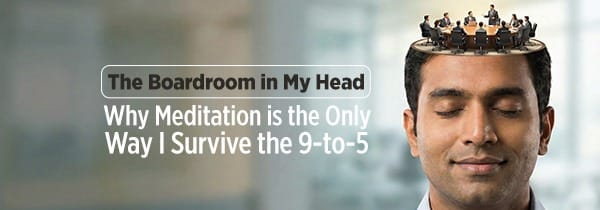
The Boardroom in My Head: Why Meditation is the Only Way I Survive the 9-to-5

By Psychology

The fluorescent lights in the office didn’t flicker, but my brain did.

It was 3:00 PM on a Tuesday. I had sixteen tabs open on my browser, a half-eaten salad on my desk, and a Slack notification that felt like a physical punch to the gut. My heart was racing, not because I had run a marathon but because I was sitting perfectly still, drowning in a sea of “what-ifs.”

What if I miss this deadline? What if I’m not as good at this as they think? What if this burnout is permanent?

For years, I wore my stress like a badge of honor. I thought “hustle culture” meant having a mind that never shuts up. I thought being a “high-performing professional” meant being a 24/7 disaster of caffeine and cortisol.

I didn’t need a vacation. I needed a new brain. And that’s when I stopped trying to outrun my thoughts and started sitting with them.

The Architecture of the “Busy” Brain

As professionals, we are paid to think. But we are rarely taught how to manage the machinery we use to do that thinking.

Recent neurobiological research has shown that chronic workplace stress actually reshapes our anatomy. When we stay in “survival mode,” our amygdala—the brain’s primitive alarm system—gets enlarged and hyper-reactive. It’s like having a smoke detector that goes off every time you light a candle.

Meanwhile, the Prefrontal Cortex (PFC)—the part of the brain responsible for logic, focus, and executive decision-making—starts to thin out.

In plain English: Stress makes us reactive and dim-witted. Meditation makes us intentional and sharp.

The Day the Wipers Turned On

I used to think meditation was for people who had “nothing better to do.” I thought it was about floating on a cloud of Zen.

The first time I tried it, I lasted exactly 90 seconds. My mind felt like a room full of toddlers who had just discovered espresso. I felt itchy, annoyed, and even more stressed than before.

But then, I read a study from Harvard University that changed my perspective. Researchers found that just eight weeks of consistent mindfulness practice actually increased gray-matter density in the hippocampus (the part of the brain responsible for learning and memory) and decreased it in the amygdala.

I realized meditation isn’t about “emptying the mind.” It’s about weightlifting for the brain. Every time your mind wanders to an email, and you gently bring it back to your breath, you are doing a “rep.” You are physically strengthening the neural pathways that allow you to stay calm when a client is screaming or a project is failing.

Why Professionals Need This “Software Update”

Meditation isn’t a “soft skill.” It is a hard-edged competitive advantage. Here is what actually happens to your brain when you stop “doing” and start “being”:

  • The “Gap” Created: Meditation creates a split-second gap between a stimulus (a rude comment) and your response. In that gap lies your professional power.
  • Default Mode Network (DMN) Quietening: Science calls it the DMN; I call it the “Monkey Mind.” It’s the part of the brain that rants about the past and worries about the future. Meditation dials the volume down on this chatter.
  • Cortisol Regulation: Recent 2024 data suggests that even 10 minutes of mindfulness can significantly lower blood cortisol levels, preventing the “afternoon crash” that plagues most office workers.

It’s Not About the Mat; It’s About the Meeting

I don’t meditate to be good at meditating. I meditate to be good at my life.

The personal touch came for me when I realized that my family deserved the “meditated version” of me, not the “burnt-out professional” version. I was tired of giving my best energy to a spreadsheet and my worst energy to the people I love.

Now, I don’t wait for a “quiet space.” I meditate in the parking lot before I walk into the office. I meditate for three minutes between back-to-back Zoom calls.

I’m not “clearing my mind.” I’m cleaning the lens. When you clean the lens, you see that the “urgent” email isn’t actually an emergency. You see that your colleague’s bad mood isn’t about you. You see that you are not your thoughts—you are the person observing them.

How to Start (For the Skeptical Professional)

If you feel like you don’t have time to meditate, you are exactly the person who needs it most. Here is how to start without the fluff:

  • The “Two-Minute Drill”: Don’t aim for 20 minutes. Aim for two. Sit in your office chair, feet flat on the floor, and just notice the sensation of your breath in your nostrils. That’s it.
  • The “Anchor” Technique: Pick a recurring professional trigger—like the sound of a notification or opening your laptop. Use that as a cue to take three deep, conscious breaths.
  • Drop the Judgment: Your mind will wander. That is what minds do. The goal isn’t to stop the thoughts; it’s to stop being bullied by them.
  • Focus on “Grace over Greatness”: Some days your meditation will feel peaceful. Other days it will feel like a cage match with your own ego. Both sessions are equally effective for your brain.

The Conclusion: Your Brain Is Your Best Asset. Invest in It.

We spend thousands of dollars on professional development, degrees, and technology. Yet, we ignore the very organ that processes every single bit of that information.

You wouldn’t expect your laptop to run for five years without a reboot. Why do you expect your brain to?

The boardroom in your head doesn’t have to be a place of chaos. It can be a place of clarity. But you have to be the one to step in and take the chair.

The 60-Second Challenge

I’m not asking you to buy a cushion or chant. I’m asking you to protect your most valuable resource.

Right now—before you click away to the next tab—close your eyes. Take one deep breath in through your nose, hold it for three seconds, and exhale slowly through your mouth. Notice the weight of your body in your chair.

That feeling? That tiny spark of stillness? That is the beginning of a better brain.

Will you give yourself ten minutes of stillness tomorrow morning, or will you let the fog win again? Your move.

No single programming language is enough in today’s technology-driven world. A successful Computer Science student in 2026 should aim to build a strong foundation with multiple languages, understand their use cases, and apply them through projects.

TOP PROGRAMMING LANGUAGES EVERY COMPUTER SCIENCE STUDENT SHOULD LEARN IN 2026

By Computer Science

Computer science is changing more quickly than it has in the past. Selecting the appropriate programming languages has become crucial for every computer science student due to the quick developments in artificial intelligence, cloud computing, web technologies, and data-driven applications.

Employers in 2026 demand real skills and flexibility, not just degrees. Gaining proficiency in a variety of programming languages can enhance project work, increase problem-solving skills, and lead to internship and employment opportunities.

These are the top programming languages, along with their significance and uses,

  1. Python – The Most Versatile Language

Python continues to dominate the programming world due to its simplicity and wide range of applications. Its easy-to-read syntax makes it an excellent choice for beginners, while its powerful libraries make it suitable for advanced applications.

Python is widely used in Artificial Intelligence, Machine Learning, Data Science, web development, and automation. Many universities and research institutions prefer Python for academic and research projects.

Key Applications:

  • AI and Machine Learning
  • Data analysis and visualisation
  • Web development
  • Automation and scripting

Why students should learn it:
Python helps students focus more on logic and problem-solving rather than syntax complexity.

2. JavaScript – The Backbone of the Web

JavaScript is the core language of web development. Every interactive website today relies on JavaScript. With frameworks like React, Angular, and Vue, JavaScript has become essential for front-end development. TypeScript, a typed version of JavaScript, is gaining popularity for building large and scalable applications.

Key Applications:

  • Front-end web development
  • Full-stack development
  • Mobile app development

Why students should learn it:
It enables students to build real-world, interactive applications and strengthens full-stack development skills.

3. Java – The Enterprise Standard

Java has been a reliable and powerful language for decades. It is widely used in enterprise-level applications, Android development, and backend systems. Java’s object-oriented nature makes it ideal for understanding core software engineering concepts.

Key Applications:

  • Enterprise applications
  • Android apps
  • Backend systems
  • Big data technologies

Why students should learn it:
Java provides strong fundamentals in object-oriented programming and offers excellent job opportunities.

4. C# – Modern Application and Game Development

C# is a powerful language used mainly in the .NET ecosystem. It is popular for developing desktop applications, web applications, and games using the Unity game engine.

Key Applications:

  • Desktop and web applications
  • Game development
  • Enterprise software

Why students should learn it:
C# is beginner-friendly yet powerful, making it suitable for modern application development.

5. Go (Golang) – Cloud and Scalable Systems

Go was developed by Google to handle large-scale systems efficiently. It is known for its simplicity, speed, and excellent support for concurrent programming.

Key Applications:

  • Cloud-based applications
  • Microservices
  • Backend systems

Why students should learn it:
Go is highly demanded in cloud computing and DevOps-related roles.

Conclusion

No single programming language is enough in today’s technology-driven world. A successful Computer Science student in 2026 should aim to build a strong foundation with multiple languages, understand their use cases, and apply them through projects.

At first sight, computer science may appear to be a discipline ruled entirely by inflexible logic, complex algorithms, and endless lines of code. To the casual observer, the life of a computer science student can seem bleak—dominated by constant debugging, heavy technical writing, and fast-paced problem-solving.

A Playful Overview of Humor in Computer Science

By Computer Science

Explanation of Humor Within Computer Science

At first sight, computer science may appear to be a discipline ruled entirely by inflexible logic, complex algorithms, and endless lines of code. To the casual observer, the life of a computer science student can seem bleak—dominated by constant debugging, heavy technical writing, and fast-paced problem-solving. However, beneath this structured exterior lies an unexpectedly rich culture of humor that forms a vital part of the student experience.

Humor in computer science education serves important and legitimate purposes beyond mere entertainment. It is a valuable resource for fostering student engagement, relieving academic stress, and encouraging social interaction. Long coding cycles, repeated errors, and the challenge of understanding abstract concepts can be mentally and emotionally taxing. Humor helps counter this fatigue by transforming frustration into laughter and isolation into shared experience.

Computer science students frequently find themselves in unintentionally humorous situations: late-night coding sessions fueled by caffeine, baffling compiler errors that defy logic, programs that behave in absurd ways, and passionate debates over the “best” programming language. Together, these experiences form a collective narrative that strengthens the learning community. This paper explores the lighter side of computer science by examining student life, common stereotypes, and the humorous realities of coding, demonstrating that laughter thrives even in a field defined by precision.

The Quirky Life of a Computer Science Student

Late-Night Coding Sessions and Their Antics

Late-night coding sessions are a hallmark of computer science student life. As deadlines approach, students gather in dorm rooms, laboratories, or online calls, surrounded by glowing screens, half-empty coffee cups, and discarded snack wrappers. Although productivity is the goal, these sessions often take an unexpectedly humorous turn.

Fatigue commonly leads to unintentional errors—running the wrong program, sending test messages to entire classes, or celebrating a “solution” that later proves completely incorrect. When someone realizes they spent hours debugging code that was never saved or forgot to remove a single misplaced character, laughter usually fills the room. These moments of shared exhaustion and humor strengthen friendships and turn demanding nights into memorable stories retold long after graduation.

The Battle with Java and Other Programming Languages

Programming languages inspire stronger emotions than many other topics in computer science. Java, Python, C++, and JavaScript each attract both loyalty and frustration, often resulting in endless debates. A mismatched bracket or missing semicolon can instantly turn functional code into a confusing, error-ridden mess, prompting collective groans from an entire class.

These discussions frequently evolve into playful arguments, with students defending their preferred languages as passionately as sports fans or diet enthusiasts. Statements such as “Python is too simple” or “Java is too verbose” are rarely meant seriously and instead serve as humorous banter. The absurdity of these debates fosters a shared sense of humor and belonging among students facing similar challenges.

Classroom Shenanigans: Group Projects Gone Wrong

Group projects are both a learning opportunity and a source of frustration and laughter. Combining different coding styles, ideas, and levels of commitment often leads to unexpected results. One student may write excessively detailed comments, another may forget to push updates, while a third might accidentally delete important files.

Such projects generate some of the funniest stories in student life—conflicting variable names, failed merges, and last-minute fixes under intense pressure. While stressful at the time, these experiences teach valuable lessons in teamwork, patience, and resilience. Most importantly, they demonstrate that failure can be humorous when it is a shared experience.

III. Funny Stereotypes and Clichés

The “Introverted Coder” Trope

Popular culture often portrays computer science students as introverted, socially awkward individuals perpetually glued to their screens. While many students enjoy solitary problem-solving, this stereotype is misleading. Hackathons, study groups, and competitions reveal highly collaborative, energetic, and humorous environments.

When faced with challenging problems or creative tasks, even the shyest coder can become expressive and enthusiastic. In such spaces, humor thrives, stereotypes fade, and the diversity of personalities within computer science becomes evident.

The Love-Hate Relationship with Mathematics

Mathematics is both a crucial and a persistent challenge for computer science students. Subjects such as discrete mathematics, probability, and algorithms form the foundation of the discipline, but can also be overwhelming. Study sessions are often filled with intense discussions alongside self-deprecating jokes about exams and assignments.

These shared struggles foster camaraderie and transform difficult topics into sources of humor. The experience reinforces the idea that struggling with mathematics is not a sign of failure but a normal—and sometimes comedic—part of the learning process.

The Tech Support Hero Across All Groups

Almost every social group has a designated “tech support” person, often a computer science student assumed to solve any technical issue. From malfunctioning printers to laptops that refuse to start, these students are hailed as heroes—only to discover that the problem is an unplugged cable or an empty battery.

Such moments generate lighthearted embarrassment and lasting jokes. They humanize technical expertise and remind everyone that even the most knowledgeable individuals make simple mistakes.

Coding Challenges in a Lighthearted Manner

Bugs and Glitches Made Fun Of

Bugs are an unavoidable part of programming, and some errors are unintentionally humorous. A minor typo can result in infinite loops, unpredictable interfaces, or nonsensical outputs. Rather than becoming discouraged, students often laugh at their mistakes, sharing screenshots and stories of their most absurd bugs.

These glitches become inside jokes and valuable learning moments, helping students develop patience and perspective.

Creative Solutions for Unusual Problems

Computer science students frequently display creativity in unexpected ways. Simple assignments may evolve into playful experiments—calculators that tell jokes, programs that deliver motivational messages, or error prompts written with sarcasm.

These creative elements demonstrate that coding is not purely mechanical. Humor becomes a form of expression within technical constraints, highlighting the imaginative potential of programming.

The Value and Challenges of Debugging

Debugging is often compared to detective work—except that the programmer is usually the culprit. Students may spend hours searching for a bug only to discover it was caused by a single misplaced character. Debugging sessions typically involve collaborative brainstorming, exaggerated blame, and shared laughter.

Though frustrating, these experiences build strong bonds and contribute to the shared culture of computer science education.

Conclusion: Humor in Computer Science

The Effect of Humor on Learning

Humor reduces stress, increases engagement, and improves knowledge retention. By laughing at mistakes, students approach learning with curiosity rather than fear. Humor makes complex and abstract concepts more accessible and encourages creative thinking.

Positive Community Building

Shared laughter helps create supportive learning communities where students feel comfortable asking questions and collaborating. Humor fosters openness, resilience, and mutual respect, contributing to academic success.

Inspiring Future Computer Scientists

Emphasizing the playful and human side of computer science can inspire future generations to pursue the field with confidence. When students view coding as a creative, collaborative, and enjoyable activity, they are more likely to engage enthusiastically.

Ultimately, computer science is about more than solving problems. Amid algorithms and code, humor serves as a reminder that learning is a deeply human experience—one best shared with a smile.


 

Deep learning is a part of artificial intelligence that allows computers to learn from data in a way similar to how humans learn from experience. Instead of giving the computer fixed rules, we provide examples and let it learn patterns on its own.

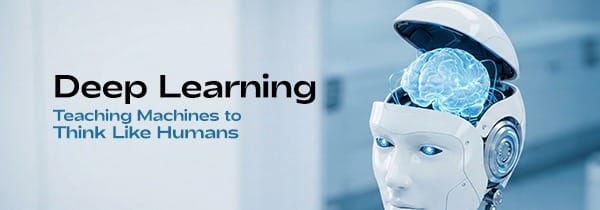
Deep Learning: Teaching Machines to Think Like Humans

By AI, Technology

Deep learning is a part of artificial intelligence that allows computers to learn from data in a way similar to how humans learn from experience. Instead of giving the computer fixed rules, we provide examples and let it learn patterns on its own.

In earlier days, computers worked only with rules written by humans. For simple tasks, this worked well. However, for complex tasks like recognizing faces, understanding handwriting, or detecting fake documents, writing rules is very difficult. Deep learning helps solve these problems by learning directly from data.

Deep learning uses neural networks, which are inspired by the human brain. These networks contain layers. The input layer receives data, the hidden layers learn important features, and the output layer gives the final result. When many hidden layers are used, the learning becomes deeper, which is why it is called deep learning.

One major advantage of deep learning is that it automatically learns useful features without human effort. It performs very well when large amounts of data are available and often provides high accuracy compared to traditional methods.

There are different types of deep learning models. Convolutional Neural Networks (CNNs) are mainly used for image-related tasks such as face recognition and medical image analysis. Recurrent Neural Networks (RNNs) are used for text, speech, and time-based data.

Deep learning is already part of our daily life. It is used in smartphones for face unlock, in Google search for auto suggestions, in YouTube and Netflix for recommendations, and in banking systems for fraud detection.

Although deep learning is powerful, it also has limitations. It needs large datasets, strong computing resources, and sometimes its decisions are hard to explain. Therefore, careful and ethical use is important.

In conclusion, deep learning helps computers learn from data and solve complex real-world problems. It plays an important role in modern technology and will continue to shape the future.

Close Menu
Privacy Overview

The ST PAULS COLLEGE Website uses cookies so that we can provide you with the best user experience possible. Cookie information is stored in your browser and performs functions such as recognising you when you return to our website and helping our team to understand which sections of the website you find most interesting and useful.

Read more about our Privacy Policy here