
Admission Enquiry

Skip to main content
search
All Posts By

Eldho Joy

Organisations often mistake silence for professionalism. The employee who nods along is labelled "collaborative," while the one who questions decisions is labelled "difficult." This might feel productive in the moment, but it's quietly dismantling your company from within.

When Yes Means No: How Submissive Cultures Sabotage Strategic Growth

By General

Organizations often mistake silence for professionalism. The employee who nods along is labelled “collaborative,” while the one who questions decisions is labelled “difficult.” This might feel productive in the moment, but it’s quietly dismantling your company from within.

Every failed product launch, every missed opportunity, every strategic misstep—someone saw it coming. They just chose silence over confrontation because speaking up has consequences. When dissent is punished and compliance is rewarded, you don’t build strong teams. You build echo chambers where bad ideas flourish unchallenged.

Consider what happens during a typical meeting. Someone raises a concern about an unrealistic timeline. Leadership responds defensively. The room goes quiet. Everyone learns the real lesson: keeping your head down is safer than being right. Six months later, the project fails spectacularly, and management wonders why nobody warned them.

They did. But warning and being heard are entirely different things.

The strongest organizations don’t avoid disagreement—they cultivate it strategically. They understand that the person making them uncomfortable today might save them from disaster tomorrow. Real leaders don’t surround themselves with people who agree. They seek out the voices most likely to challenge their assumptions, because they know their own perspective is incomplete.

Growth lives outside comfort zones. When meetings run too smoothly, and plans face zero pushback, that’s not alignment—it’s stagnation wearing a professional mask.

The question isn’t whether your organization has problems. The question is whether people who see those problems feel safe enough to speak up and whether leadership is brave enough to listen. Because silence isn’t harmony. It’s just a catastrophe waiting to happen.

When Market Dominance Breeds Complacency: Management Lessons from IndiGo’s Crisis

IndiGo’s recent operational meltdown offers a masterclass in how market dominance can blind management to fundamental planning failures. India’s largest airline, controlling 65 percent of the market share, cancelled thousands of flights in December 2025, stranding passengers during peak wedding season and exposing a troubling pattern: success breeding dangerous complacency.

The root cause wasn’t external disruption or unforeseen circumstances. New flight duty regulations were announced in January 2024, with airlines given months to adapt. Competitors like Air India and SpiceJet managed the transition smoothly. IndiGo didn’t. The airline admitted the crisis stemmed from planning gaps and crew mismanagement—failures entirely within management’s control.

This reveals a critical management principle: when you dominate a market, the greatest threat isn’t competition—it’s your own overconfidence. IndiGo had built its reputation on punctuality and operational excellence. Yet when regulatory changes demanded adaptation, management apparently believed its size insulated it from consequences.

The planning failure was staggering. IndiGo had approved a 6% increase in departures for winter despite knowing new duty limitations would reduce pilot availability. They expanded capacity while their workforce shrank. Basic arithmetic should have prevented this disaster, yet management pressed forward regardless.

What makes this particularly instructive is the response. Rather than accept accountability immediately, the airline initially downplayed the severity. Only after government intervention and public outcry did leadership acknowledge the crisis fully. This delayed response compounded the operational failure with a reputational one.

The lesson transcends aviation: market leadership demands heightened vigilance, not relaxed standards. Success creates blind spots. Dominance breeds assumptions that rules apply differently to you. And when that mindset takes root in management, even straightforward regulatory compliance becomes a crisis.

IndiGo’s operational excellence was built over the years. Their planning failure destroyed trust in days. That’s the real cost of complacency.

Work-Life Balance Gets Legal: Understanding India’s Right to Disconnect Proposal

What exactly is this bill everyone’s talking about?

The Right to Disconnect Bill 2025 was introduced in the Lok Sabha by NCP MP Supriya Sule on December 5th. Basically, it wants to give employees legal protection to ignore work calls, emails, and messages once they’re off work without getting into trouble for it.

So, can I just switch off my phone after work hours?

That’s the idea. The bill says you shouldn’t face disciplinary action for refusing to respond to work stuff outside office hours, on weekends, or on holidays. Think of it as putting a legal boundary around your personal time. It suggests creating an Employees’ Welfare Authority to enforce these rules and even proposes counselling services and digital detox centers to help people deal with work stress. For companies with more than ten employees, there would be proper negotiations about overtime and after-hours work.

Has the Parliament actually passed this law?

No, not yet. Here’s where it gets interesting. This is what’s called a Private Member’s Bill, which means it was introduced by an MP who isn’t a minister. These bills rarely become actual laws. In fact, Sule tried introducing similar bills twice before, in 2018 and 2021, and both times they didn’t make it through.

How does this matter then?

Because it started a conversation India desperately needs. A 2024 report showed 70% of Indian employees check work messages after hours, and burnout cases keep rising. Remember the tragic case of the young chartered accountant who died allegedly from work stress? That really pushed this issue into the spotlight.

Are other countries doing this?

Yes! France, Portugal, and Australia already have similar laws protecting employees’ right to disconnect. They’ve recognized that constant connectivity isn’t just exhausting—it’s harmful.

Whether this bill becomes law or not, one thing’s clear: we’re finally questioning whether being available 24/7 should be the norm, and India could finally give legal permission to ignore them.
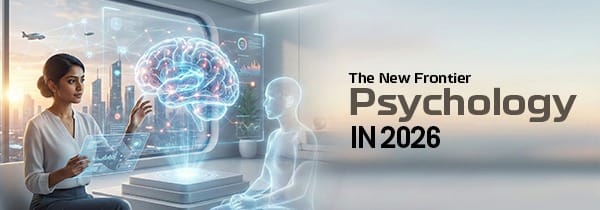

As we move deeper into 2026, the field of psychology is rapidly expanding its focus from the individual mind to the global environment. One of the most significant emerging trends is the rise of Eco-Psychology and the clinical treatment of "eco-anxiety."

The New Frontier: Psychology in 2026

By Psychology

As we move deeper into 2026, the field of psychology is rapidly expanding its focus from the individual mind to the global environment. One of the most significant emerging trends is the rise of Eco-Psychology and the clinical treatment of “eco-anxiety.” With environmental shifts becoming a daily reality, psychologists are increasingly helping patients process climate-related grief and anxiety. This has led to the mainstreaming of “Nature-Based Therapy” or forest bathing, where the natural world is not just a backdrop for a walk but a primary tool used to regulate the nervous system and restore cognitive focus.

Beyond our environment, the way we view the human brain itself is shifting toward a model of Neuro-Inclusion. In 2026, there is a powerful movement away from seeing conditions like ADHD, Autism, or Dyslexia as “deficits” to be cured. Instead, the psychological community is embracing “Neuro-Diversity” as a standard for both clinical practice and workplace design. We are seeing a surge in “body-hacking” and sensory-friendly interventions that allow neurodivergent individuals to thrive in their unique cognitive styles. This trend is supported by new wearable EEG headsets and neurofeedback tools that help individuals monitor their own brainwave activity in real time, moving mental health care into the palm of the patient’s hand.

Finally, the concept of “Continuous Care” is replacing the traditional, isolated 50-minute therapy session. In this always-on reality, psychology has become a proactive lifestyle rather than a reactive treatment. Integrated care models now see psychologists working directly alongside primary care doctors and even AI “co-therapists” to provide a seamless support network. This holistic approach recognizes that mental wellness is inextricably linked to our physical health, our digital habits, and our social equity. In 2026, the goal of psychology has evolved: it is no longer just about fixing what is broken, but about designing a world where every type of mind can flourish.

We often hear the phrase “you are what you eat,” usually right before reaching for junk food. While it may sound like a guilt-tripping slogan, science strongly supports the idea especially when it comes to mental health.

The Impact of Nutrition on Mental Health: Why Your Brain Cares About What’s on Your Plate

By Psychology

We often hear the phrase “you are what you eat,” usually right before reaching for junk food. While it may sound like a guilt-tripping slogan, science strongly supports the idea, especially when it comes to mental health. The brain may only weigh about 2% of the body, but it consumes nearly 20% of our daily energy, which means what we eat directly affects how we think, feel, and cope with stress.

Nutrition plays a vital role in brain structure and function. Essential nutrients such as omega-3 fatty acids, B-complex vitamins, iron, zinc, and magnesium support neurotransmitter production and neural communication (GĂłmez-Pinilla, 2008). When the brain lacks these nutrients, mood regulation can take a hit, often showing up as fatigue, irritability, anxiety, or low mood.

Omega-3 fatty acids, commonly found in fatty fish, walnuts, and flaxseeds, are particularly important for emotional well-being. Research has linked omega-3 deficiency with higher rates of depression and cognitive decline (Freeman et al., 2014). These fats help maintain neuronal membranes, allowing brain cells to communicate more efficiently; think of them as good Wi-Fi for your brain.

B vitamins, especially B6, B12, and folate, are crucial for serotonin and dopamine synthesis. Low levels of these vitamins have been associated with depression and increased stress vulnerability (Jacka et al., 2017). This explains why a chronically poor diet often affects mood before it affects waistlines.

The gut–brain connection also deserves attention. About 90% of serotonin is produced in the gut, and a diet rich in fiber, probiotics, and fermented foods supports healthy gut bacteria (Dinan & Cryan, 2017). A disturbed gut microbiome, often caused by excessive processed foods and sugar, has been linked to anxiety and depressive symptoms. In other words, your gut has opinions, and it’s not shy about sharing them with your brain.

On the flip side, diets high in refined sugars and ultra-processed foods are associated with increased inflammation and poorer mental health outcomes (Lassale et al., 2019). These foods may offer temporary comfort, but they rarely help long-term emotional balance.

In conclusion, good mental health is not just about therapy and medication; it also begins in the kitchen. Eating well won’t magically solve all psychological problems, but it creates a strong foundation for emotional resilience. Your brain, quite literally, runs on food, so it’s worth feeding it wisely.

The landscape of clinical psychology is currently undergoing a massive shift toward Precision Mental Health—an approach that treats the individual’s specific biology and environment rather than just their general diagnosis.

The Precision Revolution: Why One-Size-Fits-All Therapy is Fading

By Psychology

The landscape of clinical psychology is currently undergoing a massive shift toward Precision Mental Health—an approach that treats the individual’s specific biology and environment rather than just their general diagnosis. For decades, the field relied heavily on a “wait and see” model where a patient would describe symptoms and a clinician would offer a standard treatment, such as Cognitive Behavioral Therapy, hoping it would eventually stick. Today, however, we are moving away from broad labels and “trial and error” methods. A diagnosis like “Major Depressive Disorder” is now seen merely as a starting point. By investigating the gut-brain axis and neuro-inflammation, clinicians are discovering that for some, mental distress is a biological response to physical inflammation, while for others, it is a purely cognitive habit.

This data-driven approach is further supported by the rise of digital phenotyping, which allows clinicians to analyze objective data from sleep patterns and social interactions. This information helps determine the specific subtype of an illness a patient is experiencing, allowing the therapist to skip the guesswork and move straight to the intervention that matches the patient’s unique internal “signature.” Beyond just tracking data, clinical research is also refining how we treat anxiety and trauma through a concept known as Expectancy Violation. It is no longer enough to simply face a fear; modern therapy is most effective when a patient’s specific negative expectations are explicitly disproven during a session. This creates a “neural mismatch” that forces the brain to update its safety protocols, leading to faster and more permanent relief than traditional exposure alone.

Ultimately, this evolution does not replace the human element of therapy; it strengthens it. By utilizing objective data and biological insights, the “clinician of the future” can spend less time on administrative updates and more time on the therapeutic alliance. When a therapist already understands the physical and digital patterns of a patient’s week, they can dive immediately into the core emotional issues. This creates a clinical experience that is more efficient, targeted, and deeply personal, ensuring that mental healthcare is as precise and proactive as modern physical medicine.

BA Psychology Admission in Bangalore

The Mind in 2026: Beyond the Therapy Couch

By Psychology

For decades, the image of psychology was defined by a quiet room and a comfortable sofa. But as we move through 2026, the field is undergoing a radical transformation. Driven by rapid technological shifts and a move toward “bottom-up” healing, the way we understand and treat the human mind is becoming more integrated, accessible, and embodied than ever before. This evolution is bridging the gap between our digital lives and our biological realities.

One of the most visible shifts is the integration of Artificial Intelligence as a “strategic partner” in mental wellness. We have moved past simple chatbots; today, agentic AI tools assist clinicians by analyzing session patterns and summarizing notes, allowing therapists to focus entirely on the human connection. For the individual, these tools provide “Continuous Care,” offering real-time cognitive exercises and support during the high-stress moments between weekly appointments, effectively democratizing access to psychological tools that were once gated behind expensive hourly rates.

Simultaneously, we are witnessing a significant move away from purely “talk-based” interventions. The trend in 2026 is centered on Somatic Psychology, fueled by research showing that trauma and chronic stress are often stored in the body’s nervous system rather than just our conscious thoughts. This has brought “bottom-up” therapies into the mainstream, where practitioners focus on regulating the vagus nerve and the autonomic nervous system. By using techniques like EMDR and specialized breathwork, people are learning to quiet their “fight-or-flight” responses physically, proving that healing the mind often begins with calming the body.

Finally, the boundary between technology and biology continues to blur through the use of Virtual Reality and neuroplasticity-based training. Virtual Reality Exposure Therapy (VRET) has become the gold standard for treating PTSD and phobias, providing a safe, controlled environment for patients to rewire their fear responses. As we gain a deeper understanding of the brain’s ability to reorganize itself, these digital interventions are being used not just to treat illness but to optimize cognitive performance. In 2026, psychology is no longer just a medical practice—it is a holistic pursuit of thriving in an increasingly complex world.

BA English Degree Courses in Bangalore

World Literature: Comparative Studies of Literature from Different Cultures

By BA English

World Literature is a dynamic field of study that examines literary texts across national, linguistic, and cultural boundaries. At ST PAULS COLLEGE, the study of World Literature emphasizes comparative analysis, cultural dialogue, and global perspectives, enabling students to engage deeply with diverse literary traditions while understanding literature as a shared human experience. World Literature includes texts that circulate beyond their place of origin through translation, adaptation, and global readership. Students encounter literary works from Asia, Africa, Europe, Latin America, and the Middle East, exposing them to a wide range of narrative forms, philosophical traditions, and socio-historical contexts. Through this global engagement, learners understand how literature reflects cultural identity, historical trauma, social change, and collective memory.

The comparative approach of literature, followed at ST PAULS COLLEGE encourages students to read texts in relation to one another rather than in isolation. For instance, postcolonial novels from Africa, South Asia, and the Caribbean may be studied together to explore shared experiences of colonialism, resistance, and cultural hybridity. Similarly, classical epics can be compared with modern reinterpretations to examine how literary traditions evolve across time and space. A central focus of World Literature is translation, which acts as a bridge between cultures. Students learn to appreciate translation not merely as linguistic transfer but as a creative, cultural, and political act. Discussions address how meaning shifts across languages, how translators influence interpretation, and how global literary canons are formed. This awareness helps students develop sensitivity to cultural nuance and ethical representation.

World Literature also fosters critical thinking by encouraging students to question dominant narratives and recognize marginalized voices. Literature from indigenous, diasporic, and minority communities allows learners to engage with alternative histories and perspectives, promoting empathy and global citizenship. At ST PAULS COLLEGE, the study of World Literature equips students with strong analytical skills, cultural awareness, and comparative methodologies. These competencies prepare graduates for careers in academia, education, media, publishing, translation, and international communication. Ultimately, World Literature enables students to understand both cultural diversity and human interconnectedness, making literature a powerful tool for engaging with the complexities of the contemporary world.

Machiavelli’s lasting relevance lies in his intellectual honesty. He forced political thought to confront uncomfortable truths about ambition, fear, and power. In doing so, he did not reject morality altogether, but challenged us to recognise its limits within political life.

ANALYZING MACHIAVELLI’S INFLUENCE ON MODERN POLITICAL THOUGHT

By Political Science

Why does a political thinker from the sixteenth century still make us uneasy today? Niccolò Machiavelli unsettles modern readers not because he glorified cruelty, but because he stripped politics of comforting moral illusions. At a time when political theory spoke mostly about ideal rulers and virtuous states, Machiavelli chose to write about power as it was actually exercised. That choice continues to shape how we think about politics.

Living in a deeply unstable Renaissance Italy, marked by foreign invasions and fragile city-states, Machiavelli observed that good intentions alone did not protect political and social order. In The Prince, he argued that rulers must be prepared to act decisively, and sometimes harshly, when circumstances demand it. What made his work controversial was not the advice itself, but his willingness to separate political necessity from moral virtue. For Machiavelli, the survival of the state mattered more than the moral reputation of its ruler.

This realism left a lasting imprint on modern political thought. Later thinkers such as Thomas Hobbes and Max Weber echoed Machiavelli’s insistence that power, authority, and human self-interest lie at the center of political life. In international relations, realist theories that prioritize national interest and security over idealism reflect this legacy. Even in the twenty-first century, the behavior of states during wars, crises, or economic disruptions often reveals assumptions that are unmistakably Machiavellian.

Machiavelli’s influence is also visible in how we judge political leadership today. Leaders are rarely assessed only on their intentions; they are evaluated by results. Did they maintain stability? Did they protect institutions? Did they act decisively in moments of uncertainty?

This outcome-oriented approach, though rarely acknowledged, owes much to Machiavelli’s insistence that effectiveness matters more than appearances. As a teacher of political science, I find this tension between moral ideals and political necessity both unsettling and impossible to ignore.

Yet portraying Machiavelli as an advocate of tyranny oversimplifies his thought. In The

Discourses on Livy, he expressed admiration for republican government, civic engagement, and the rule of law. His concern was not power without limits, but political romanticism. He warned against believing that complex societies could be governed through moral purity alone. And that is certainly true in most cases- we know how Gorbachev’s policy of Glasnost and Perestroika ultimately led to the disintegration of the USSR.

Machiavelli’s lasting relevance lies in his intellectual honesty. He forced political thought to confront uncomfortable truths about ambition, fear, and power. In doing so, he did not reject morality altogether but challenged us to recognize its limits within political life. In today’s uneasy political climate, where democracies strain and power games persist almost everywhere, Machiavelli still sounds surprisingly familiar—and disturbingly relevant.

MSc Psychology in Bangalore

The Blueprint of the Mind: Understanding Genetics in Mental Health

By Psychology

When we discuss mental health, we often focus on external factors like stress, relationships, or lifestyle. However, modern science has revealed a deeper layer: our DNA. Genetics plays a pivotal role in determining our vulnerability to conditions like depression, schizophrenia, and bipolar disorder. Rather than a single “bad gene” being responsible, research shows that mental health is shaped by a complex web of genetic instructions that can influence how our brains develop and respond to the world.

Recent breakthroughs have transformed our understanding of this biological link. In 2025, a landmark study of over a million individuals identified five genetic signatures shared across 14 different psychiatric disorders. This suggests that many conditions we once thought were entirely separate are actually linked at a biological level. At Stanford, researchers have also discovered that “structural variants”—large-scale shifts in DNA sequences—create a network of changes that tip the scales toward certain disorders.

Despite these findings, it is vital to remember that DNA is not destiny. Think of genes as seeds and the environment as the soil. A person may carry a genetic predisposition for anxiety, but a supportive environment, stable home, and healthy coping mechanisms can prevent that “seed” from ever taking root. Genetics and environment are constantly “talking” to one another; our life experiences can actually influence how certain genes are expressed.

This biological perspective is a powerful tool for dismantling the stigma surrounding mental illness. By viewing these disorders as biological realities—similar to heart disease—we shift the conversation from “personal weakness” to medical wellness. Looking ahead, the goal is precision psychiatry, where doctors use genetic profiles to skip the “trial-and-error” phase of medication. By understanding our unique blueprint, we move toward a future of mental health care that is kinder, smarter, and more effective.

Top BSc Psychology colleges in Bangalore

The Role of Neurotransmitters in Mood Regulation: Your Brain’s Chemical WhatsApp Group

By Psychology

Ever wondered why some days you feel on top of the world and on others, even your favorite song feels annoying? The answer lies less in your horoscope and more in tiny chemical messengers called neurotransmitters. These chemicals act like your brain’s internal WhatsApp group, constantly sending, receiving, and sometimes misinterpreting messages that shape your mood.

Mood is not just “all in your head”; well, technically it is, but not in the way people mean it. Our emotional ups and downs are largely shaped by neurotransmitters, the brain’s chemical messengers that quietly run the show behind every smile, sigh, and sudden wave of irritation. When these chemicals are in balance, life feels manageable; when they’re not, even small tasks can feel overwhelming.

Neurotransmitters allow neurons to communicate with one another, influencing emotions, motivation, sleep, and stress responses. Among the many neurotransmitters in the brain, a few play a particularly crucial role in mood regulation (Stahl, 2013).

Serotonin is often labelled the “mood stabilizer.” It contributes to feelings of well-being, emotional control, and restful sleep. Research consistently links low serotonin levels with depression and anxiety, which explains why selective serotonin reuptake inhibitors (SSRIs) are commonly prescribed in mood disorders (Cowen & Browning, 2015).

Dopamine, on the other hand, is the brain’s reward and motivation chemical. It helps us experience pleasure and maintain focus. When dopamine levels are low, individuals may feel emotionally flat or unmotivated; when excessively high, it can lead to impulsivity or manic-like symptoms (Grace, 2016). In simple terms, dopamine answers the question, “Why should I even try?”

Norepinephrine plays a key role in alertness and emotional energy. It prepares the brain to respond to stress and challenges. Reduced activity of this neurotransmitter is associated with low energy and depressed mood, while overactivity can contribute to anxiety and restlessness (Moret & Briley, 2011).

Finally, GABA (Gamma-Aminobutyric Acid) acts as the brain’s natural brake system. It calms neural activity and helps regulate anxiety. Low GABA levels are frequently observed in individuals with mood and anxiety disorders, making emotional regulation more difficult (Nemeroff, 2003).

Mood regulation is not governed by a single “happy chemical” but by a delicate balance among multiple neurotransmitters. Genetics, stress, sleep, diet, and life experiences can all disrupt this balance. Understanding this neurochemical foundation helps shift the narrative from blaming oneself to recognizing mood disorders as biologically influenced and treatable conditions.

In short, your brain isn’t dramatic; it’s chemical. And sometimes, it just needs better balance.

BA English Degree Courses in Bangalore

Beyond the Books: Why a BA in English is Your Gateway to the Digital Future

By BA, BA English

Choosing the right course can feel like a monumental task—a crossroads where your future seems to hang in the balance. But it is less about finding one “perfect” path and more about discovering where your passions meet the needs of the modern world. For many students, a Bachelor of Arts (BA) is that perfect intersection. In a world dominated by screens, a degree in English is no longer just a qualification; it is a high-level training program for a tech-driven society.

The Power of Language in a Digital Era

Consider the vibrant landscape of English Literature. This isn’t just about reading old books. It is an immersive dive into storytelling, critical analysis, and the power of language. Studying English sharpens your ability to interpret complex ideas and builds empathy by helping you understand different perspectives.

Today, English is a vital life skill. Whether in a corporate boardroom or a newsroom, the ability to communicate clearly is a “niche” power. Modern institutions, such as ST PAULS COLLEGE, emphasize this by combining classical literature with practical training, ensuring students don’t just study texts but learn to create them for modern media.

The Promise of Digital Humanities

The most exciting change for BA students today is the rise of Digital Humanities. This is where traditional literature and social sciences meet modern technology. It holds great promise because it proves that human creativity and machine intelligence work best together.

Digital Humanities allows you to use tech tools to analyze large datasets of literature or map historical movements. For a student, this means you aren’t just writing essays; you are learning Data Analytics and Content Strategy. This multidisciplinary approach—combining English with subjects like Political Science or Psychology—prepares you for high-growth corporate roles:

  • UX (User Experience) Writer: Designing the helpful text inside apps like Zomato or Instagram.
  • Political Analyst: Using data to understand voting patterns and policy impacts.
  • Corporate Communications: Managing a global brand’s voice and public reputation.

Your Path Forward

The career path for a BA graduate is no longer restricted to just teaching or research. By choosing a comprehensive BA program at a forward-thinking institution like ST PAULS COLLEGE, you gain a 360-degree view of human behavior and digital trends. You aren’t just studying the past; you are gaining the storytelling and tech-friendly skills needed to lead the future.

Close Menu
Privacy Overview

The ST PAULS COLLEGE Website uses cookies so that we can provide you with the best user experience possible. Cookie information is stored in your browser and performs functions such as recognising you when you return to our website and helping our team to understand which sections of the website you find most interesting and useful.

Read more about our Privacy Policy here