Admission Enquiry

Skip to main content
search
Category

Journalism and Mass Communication

As newsrooms continue to evolve, the demand for skilled, adaptable, and tech-savvy media professionals is growing. The Journalism and Mass Communication programme at ST PAULS COLLEGE equips students with both technical expertise and strong editorial understanding, empowering them to confidently navigate, and shape, the future of the media industry.

The Evolution of News Editing: Shaping the Future of Stories

By Journalism and Mass Communication

News editing has undergone a remarkable transformation over the decades, evolving from a labor-intensive craft into a fast, technology-driven process that shapes how stories reach audiences today.

In the early days of broadcast journalism, video editing was entirely manual. Editors and journalists physically cut and joined film strips with precision tools. Even a minor mistake meant redoing hours of painstaking work. The process was slow and demanding and required exceptional patience, technical skill, and attention to detail. Editing was not just a task, it was a craft mastered over time.

Today, news editing operates in a high-speed digital environment. Powerful computers and advanced software enable journalists to edit footage, correct colour, add graphics, integrate sound, and broadcast content almost instantly. What once took several hours, or even days, can now be completed in minutes. This shift has made news production faster, more efficient, and visually dynamic, allowing stories to keep pace with a rapidly changing world.

Looking ahead, Artificial Intelligence (AI) is redefining the future of news editing. Modern editing tools are evolving into intelligent assistants that support journalists rather than replace them. AI can transcribe interviews in seconds, reduce background noise, organize vast volumes of footage, and even suggest the most effective shots from raw clips. By reducing technical workload, these tools allow editors and journalists to focus more on storytelling, accuracy, and creative impact.

At ST PAULS COLLEGE, the Department of Journalism and Mass Communication is committed to keeping both students and faculty aligned with industry advancements. The college features a well-equipped Editing Lab and Media Studio with advanced Mac systems and professional production tools. This infrastructure bridges the gap between classroom learning and real-world broadcast practices.

To further enhance hands-on learning, the department regularly conducts technology-focused workshops and guest lectures by media professionals. These sessions help students—from beginners to advanced learners, become familiar with digital workflows and AI-enabled tools used in modern newsrooms.

Students aspiring to develop strong editing skills can begin with user-friendly platforms such as Adobe Premiere Pro, DaVinci Resolve, VN Video Editor, and CapCut.

Start Your Journey in Media Storytelling

As newsrooms continue to evolve, the demand for skilled, adaptable, and tech-savvy media professionals is growing. The Journalism and Mass Communication program at ST PAULS COLLEGE equips students with both technical expertise and strong editorial understanding, empowering them to confidently navigate and shape the future of the media industry.

MA Journalism and Mass Communication College in Bangalore

New Angles, New Stories: Learning Aerial Cinematography in Journalism

By Journalism and Mass Communication

Drones are quietly transforming the way India sees itself from above. Once limited to hobbyists and tech enthusiasts, drones have now become powerful tools for journalism, cinema, and visual storytelling. In this changing media landscape, ST PAULS College, Bengaluru, is enabling young media students to be part of this aerial revolution by blending technology with storytelling.

Across India, drones are increasingly used for news coverage, documentary filmmaking, photography, and even public services. They offer perspectives that were previously possible only through helicopters or expensive equipment. For journalism students, this means learning a future-ready skill that enhances visual narratives and adds depth to reporting. Aerial visuals can turn ordinary stories into compelling experiences, helping audiences understand scale, space, and context more clearly.

Drone cinematography is essentially the art of storytelling from the sky. With a flying camera, students can capture sweeping landscapes, follow moving subjects, and design dramatic establishing shots. In South Indian cinema, drones have become integral to song sequences, action scenes, and scenic montages, adding grandeur and cinematic appeal. For young journalists, even a campus event, protest, or cultural festival takes on a new dimension when viewed from above.

At ST PAULS College, the Department of Journalism and Mass Communication emphasizes hands-on learning alongside emerging media tools. Students are trained in reporting, video production, photography, and digital media, with drone cinematography adding a strong professional edge. The presence of a DGCA-certified drone pilot on the faculty ensures that students learn not only creative flying but also safety, regulations, and ethical use of airspace.

The faculty’s experience in working on South Indian film projects helps bridge the gap between classroom learning and industry practice. Students gain insight into shot planning, teamwork, and real-world production workflows. Through guided projects, ranging from campus films to short documentaries, students build strong portfolios that prepare them for careers in journalism, digital media, and filmmaking.

For aspiring storytellers who love visuals and innovation, Journalism and Mass Communication at ST PAULS College offers the perfect launchpad to tell stories, from the ground and from the sky.

BA Journalism course in Bangalore

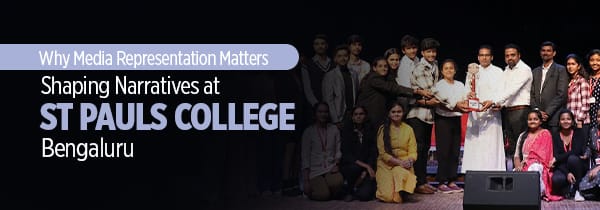
Why Media Representation Matters: Shaping Narratives at ST PAULS COLLEGE, Bengaluru

By Journalism and Mass Communication

Empower yourself with critical media insights at ST PAULS COLLEGE, Bengaluru, where the Department of Journalism and Mass Communication fosters future media professionals to engage thoughtfully with pressing societal issues like mental health representation.

Mental health has become a significant focus in today’s media landscape, influencing how society perceives and addresses critical conversations. From films and television to news and social media, the media’s role in shaping narratives is undeniable. However, this power comes with responsibility. While accurate depictions can promote empathy and understanding, sensationalism and stereotypes often perpetuate misconceptions, portraying individuals with mental illnesses as dangerous, incompetent, or broken.

At ST PAULS COLLEGE, students are challenged to critically analyze these portrayals, exploring how media can either normalize mental health conversations or contribute to stigmatization.

As a leading institution offering undergraduate and postgraduate programs in Journalism and Mass Communication, ST PAULS COLLEGE combines academic rigor with practical exposure. Through an engaging curriculum, students examine the portrayal of mental health across films, advertisements, and news, questioning its societal impact.

Workshops, industrial visits, and hands-on projects encourage students to create content that is sensitive and accurate, ensuring mental health is represented responsibly. These dynamic programs prepare graduates to lead the industry with ethical storytelling and a commitment to social change.

Students at ST PAULS COLLEGE learn to critically assess the ethical responsibilities of media makers, exploring real-world case studies and participating in research-driven discussions. By fostering truthful and compassionate storytelling, the college empowers students to challenge harmful stereotypes and contribute to a more empathetic society.

Be part of a transformative journey at ST PAULS COLLEGE, Bengaluru. Learn to shape narratives that prioritize mental health awareness and advocate for positivity in media. Let’s build a future where representation inspires understanding and drives meaningful change.

MA Communication in Bangalore

Impact of Social Media on News Consumption: Shaping How Audiences Access and Perceive Information

By Journalism and Mass Communication

Social media has revolutionized the way audiences access and perceive news, transforming platforms like Twitter, Facebook, and Instagram into powerful tools for real-time information dissemination. With the global number of social media users expected to reach 5.42 billion by 2025, these platforms have become indispensable for engaging audiences and raising awareness on a massive scale.

At ST PAULS COLLEGE, Bengaluru, students in Journalism and Mass Communication programs are equipped with the skills to navigate this rapidly evolving media landscape. The comprehensive curriculum covers essential aspects of news production, including print and magazine design, graphic design, and tools like Photoshop and InDesign. Advanced television production is taught in a state-of-the-art studio featuring teleprompters, 4K cameras, professional lighting, soundproofing, and audio consoles.

In addition to traditional media training, students delve into contemporary practices like photojournalism, film production, corporate communication, public relations, and digital content creation. The program emphasizes the role of journalists as stewards of truth, integrity, and public trust, underscoring the enduring importance of journalism as the fourth estate.

Social media platforms have democratized news production and consumption. The concept of citizen journalism empowers individuals to report on events that impact their lives directly, breaking news from virtually anywhere and delivering it to audiences instantly. Prominent figures, including the nation’s Prime Minister, utilize social media and podcasts to engage with the public and discuss critical issues like nation-building.

Even established journalists, such as Ramon Magsaysay Award winner Ravish Kumar, are leveraging platforms like YouTube to reach broader audiences. This shift from traditional media to digital spaces highlights the growing influence of social media in shaping public discourse.

Social media’s accessibility and immediacy have profoundly impacted how the public accesses and consumes news. By fostering real-time engagement and enabling diverse voices, it has expanded the scope of public awareness and education. Explore how social media shapes the future of journalism and join the journey of innovation and excellence at ST PAULS COLLEGE, Bengaluru.

BA College in Bangalore

Journalism and Mass Communication MA – Q&A with Department Head, Dr. Prashanth Venugopal

By Journalism and Mass Communication, MA

We sat down with Dr. Prashanth Venugopal, Head of the Department of Journalism and Mass Communication at ST PAULS COLLEGE. His research and teaching focus on Health Communication & Development Studies, which is supported by numerous projects he has undertaken. To name a few, he was a project Fellow of the Indian Council of Medical Research (ICMR) and has also worked on prestigious projects funded by UGC, the State Knowledge Commission, and NCW among others.

He has also been a part of projects of the Commonwealth Educational Media Centre for Asia (CEMCA) – a project that focused on ‘Science for Women’. Another project he participated in was ‘Media for Community’ (M4C), and he contributed to a project on ‘Radio Mathematics’ under the leadership of Dr. R. Sreedher and Prof. Karthik. His recent venture has been a NABARD-funded project focusing on Farmers’ Distress in Karnataka.

  1. Can you share your experience as a faculty member at ST PAULS COLLEGE, as well as your general experience in academia?

Reflecting on my 13-year journey as a faculty member at Manipal University, Bangalore University, and now at ST PAULS COLLEGE, Bengaluru, I find a sense of pride in fulfilling my responsibilities with unwavering commitment. Teaching, for me, is not just a profession but an expression of wisdom, energy, passion, and dedication. At ST PAULS, I’ve been fortunate to have the freedom to express myself; it’s a space where teaching is akin to artistry. While teaching is a structured endeavor, ensuring a consistent vibe or response from students often demands extra effort. However, at ST PAULS, both teachers and students are deeply invested in their careers and visions, making this task a rewarding challenge.

  1. How do you perceive the changes in education today compared to when you were a student?

Transitioning from a student to an industry professional and now an academician, I’ve come to understand the competitive and complex nature of the world. What once seemed like excessive pressure from teachers now appears as necessary preparation for navigating the challenges of life with happiness and fulfillment. Education, I’ve realized, aims to perfect us, but true ownership of knowledge comes from understanding its nuances.

  1. As a faculty member, what positive traits or qualities have you observed in students that you believe contribute to their success?

I’ve observed students to be inherently creative, requiring minimal intervention and encouragement to excel. While they crave freedom, it falls upon teachers to provide a solid foundation and guide them along the path to success. Sometimes, a mere nudge is all it takes for them to achieve their aspirations.

  1. What are your expectations from students both inside and outside the classroom?

As an educator, witnessing the success of my students brings me immense joy. I believe in imparting values that help them recognize the significance of their lives, both academically and personally. Additionally, when we meet on any occasion, a smile, a cup of chai, or a call discussing their success and journey further adds to the fulfilment of my role.

  1. How do you envision their engagement with the learning process beyond traditional academic settings?

As a faculty member, I strongly encourage students to embrace experiential learning beyond the conventional classroom setting (journalism is learned outside the walls of the classroom). For the students of our MA in Journalism and Mass Communication, we implement a comprehensive approach, integrating weekly fieldwork sessions dedicated to first-hand reporting and journalistic perspectives, which are then published on our portal youngreporter.in, Daily Chronicle (Newsletter),ST PAULS TV – A Weekly News Bulletin (youtube.com), and Daily Chronicle Newsletter. We also have LENCA – a platform for photographers.

Additionally, during semester breaks, we facilitate internships, forge industry partnerships, spearhead community projects, and support independent research endeavours. These immersive experiences not only cultivate practical skills but also foster critical thinking and networking abilities—key components for their holistic development and future pursuits in the field of journalism.

  1. Could you elaborate on the opportunities provided to students by the department, including involvement in festivals, activities, and projects?

In our Journalism and Mass Communication department, we prioritize fostering a culture of exploration and experimentation among our students. We have meticulously crafted an environment that facilitates hands-on experience with advanced studio facilities, providing practical learning opportunities. This empowers students to translate theoretical knowledge into tangible skills applicable in real-world scenarios through fieldwork.

By offering opportunities for creative expression and problem-solving, we aim to equip our students with the confidence and adaptability needed to thrive in the dynamic landscape of media and communication. Through this approach, we not only prepare them for the challenges of their academic journey but also instill in them a passion for lifelong learning and innovation.

  1. How do these initiatives enhance the overall student experience and academic growth?

The initiatives of Journalism and Mass Communication MA, enrich the student experience and academic growth by bridging the gap between theory and practice. Participation in festivals, activities, and projects cultivates problem-solving, creativity, teamwork, and communication skills—essential attributes for success in any field. Moreover, our equipped studio with advanced technology and interaction with industry professionals during these endeavours offers invaluable insights and networking opportunities, preparing students for the challenges of their future careers. Ultimately, such initiatives shape well-rounded individuals equipped with the skills and confidence to thrive in diverse professional settings.

That was the end of a wonderful conversation with the Head of the Department of Journalism. This is the ST PAULS Team, taking our leave to come back again soon.

Learn more about MA Journalism and Mass Communicationat ST PAULS COLLEGE, Bengaluru.


MA in Journalism and Mass Communication

Embarking on a Journey of Potential. Master’s in Journalism and Mass Communication

By Journalism and Mass Communication, MA

In an era defined by constant connectivity and information exchange, the role of journalism and mass communication has never been more pivotal. The need for qualified people with in-depth expertise in these sectors has increased as technology continues to change the media landscape. Choosing to pursue a Master’s in Journalism and Mass Communication can lead to a multitude of options and position you for success as a dynamic, well-known communicator and societal analyst.

A Master’s degree, first and foremost, offers a more in-depth and sophisticated comprehension of the changing media scene. Students learn about the newest methods and instruments influencing contemporary journalism, from social media trends to multimedia storytelling. Maintaining a competitive edge in a field that values creativity and flexibility requires this advanced expertise. Additionally, a master’s degree improves analytical and critical thinking abilities. Journalism involves more than merely gathering and reporting facts; it also involves analysing, interpreting, and placing data in context. Gaining a Master’s degree helps you improve your capacity to evaluate complicated problems, challenge presumptions, and effectively communicate information. Graduates are great assets in a competitive employment market since these talents are transportable across numerous sectors.

Master’s programmes offer a wealth of networking possibilities that link aspiring journalists with seasoned professionals and like-minded peers. Building connections with business executives and fellow students can result in collaborations, job offers, and internships that broaden your professional prospects and enhance your educational experience. Furthermore, a lot of Master’s programmes have specialised tracks that let students focus their education on certain interests. The ability to concentrate on a specific field, such as investigative journalism, digital media, or strategic communication, guarantees that graduates will be prepared to handle the challenges of their chosen professional pathways.

It is impossible to exaggerate the legitimacy and status that come with holding a Master’s degree in journalism and mass communication. Advanced degrees are frequently seen by employers as evidence of a candidate’s competence, devotion, and dedication to their field. This may play a major effect in one’s ability to progress in their profession and pave the way for leadership positions in media companies.

Getting a Master’s in Journalism and Mass Communication from ST PAULS COLLEGE is an investment in your future, not just a degree. You can enroll our Master’s in Journalism and Mass Communication Course in Bangalore, You establish yourself as a well-rounded, knowledgeable professional prepared to make a significant effect in the fast-paced world of media and communication by developing advanced skills, expanding your network, and specialising in a particular field.

At ST PAULS COLLEGE, we adopt a holistic strategy, blending weekly fieldwork sessions focused on firsthand reporting and journalistic viewpoints. These reports are subsequently featured on our platform youngreporter.in, as well as in the Daily Chronicle newsletter and ST PAULS TV – our weekly news bulletin on YouTube.

Additionally, we enable internships, establish industry collaborations, lead community initiatives, and endorse independent research ventures. These immersive opportunities not only nurture practical competencies but also cultivate critical thinking and networking skills—essential elements for their comprehensive growth and future endeavors in journalism.

Journalism and Mass Communication in Bangalore

Exploring a Bachelor’s Degree in Journalism and Mass Communication

By Journalism and Mass Communication

In our fast-paced world, change is constant, and with it comes fresh opportunities. The Bachelor’s program in Journalism and Mass Communication is a pathway forged in this new era, offering a dynamic scope of vocational positions.

Understanding Journalism and Mass Communication

This field delves into how information is gathered, processed, and shared across diverse media platforms to reach wider audiences. It covers media laws, ethics, storytelling, and strives for equal access to information in society.

What You’ll Learn

  • Reporting, Journalistic Writing
  • Copy Editing, Proofreading
  • Communication Strategies
  • Content and Freelance Writing
  • Print, Radio, Video Production
  • Public Relations, Advertising
  • Media Laws, Ethics
  • Social Media Management, Photography, and more.

Developed Skills

  • Critical Thinking: Analyzing and evaluating information critically.
  • Communication Proficiency: Enhancing storytelling through writing and speech.
  • Technological Literacy: Adapting to and utilizing digital tools effectively.
  • Ethical Decision Making: Handling information ethically and responsibly.

Career Prospects

Graduates can explore roles like:

  • Journalism: Reporter, Editor, Content Writer, News Anchor across print, broadcast, or digital media.
  • Public Relations: Media Manager, Brand Manager, Campaign Manager, among others.
  • Advertising: Copywriter, Market Researcher, Content Creator, Art Director, Media Buyer.
  • Media Production: Filmmaker, Video Producer, Director, Photographer, Editor, Sound Engineer.

In Conclusion

A Bachelor’s in Journalism and Mass Communication opens doors to a vibrant industry. It equips individuals with skills and ethical foundations crucial in the media world. With the digital era’s rise, this field continually expands, offering diverse opportunities for those passionate about communication and storytelling.

Whether aspiring to be journalists, content creators, communicators, or media entrepreneurs, this degree provides a sturdy launchpad into an ever-evolving and impactful realm.

Here, at ST PAULS COLLEGE, Bengaluru you can pursue a Bachelor’s degree program in Journalism along with combinations such as Psychology, English and Political Science and unleash your potential.

Close Menu
Privacy Overview

The ST PAULS COLLEGE Website uses cookies so that we can provide you with the best user experience possible. Cookie information is stored in your browser and performs functions such as recognising you when you return to our website and helping our team to understand which sections of the website you find most interesting and useful.

Read more about our Privacy Policy here