Admission Enquiry

Skip to main content
search
Tag

BA English Courses in Bangalore

At ST PAULS COLLEGE, our approach to Literary Theory introduces students to the recent developments that challenge the traditional readings of select narratives. From post structuralism and eco-criticism to digital humanities, we encourage our students to explore varied lenses for comprehending literature.

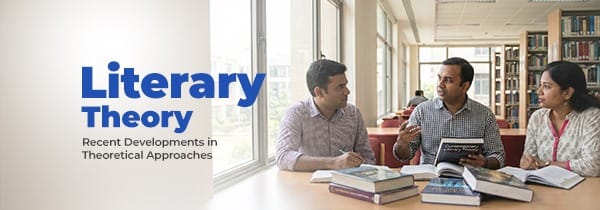
Literary Theory: Recent Developments in Theoretical Approaches

By English

Literary Theory has progressed into a field that bridges literature with philosophy, culture, and social sciences. At ST PAULS COLLEGE, our approach to Literary Theory introduces students to the recent developments that challenge the traditional readings of select narratives. From post-structuralism and ecocriticism to digital humanities, we encourage our students to explore varied lenses for comprehending literature. This course highlights the application of contemporary theories like post-humanism, affect theory, trauma theory, and intersectionality, making students proficient at analyzing narratives in today’s dynamic contexts.

The course combines classroom discussions and textual analysis as well as interdisciplinary approaches to research. Whether the students are drawn to the philosophical convolutions of Derrida, the social critique of Foucault, or even the environmental perspectives of eco critics, this course ensures that they are equipped with the methodologies and tools to think critically and innovatively about literature and its existing connection to the contemporary world. Students are also encouraged to critically engage with the meaning and interpretation, aiding them in enhancing their analytical and interpretive skills. The course also explores how technology, as well as globalization, influences literary discourse, preparing students for academic and professional growth. Thus, students emerge with a better understanding of the role of theory in shaping literary relevance to contemporary challenges.

World Literature: Comparative Studies of Literature from Different Cultures

In a world that is connected by shared stories yet shaped by unique traditions, studying World Literature provides a gateway to decipher diverse cultures. At ST PAULS COLLEGE, our course on World Literature bridges the local to the global, studying select narratives from various regions, including Latin America, Africa, Europe, and Asia. Students delve deep into comparative analyses, discussing themes like exile, identity, diaspora, and resistance through global lenses. We encourage students to trace the complex threads that connect works like Chinua Achebe’s Things Fall Apart to those of Gabriel Garcia Marquez’s magical realism or the poetic traditions of Rumi and Rabindranath Tagore.

With an emphasis on intercultural dialogue, this course enables a deeper appreciation of humanity’s shared narratives while also celebrating cultural specificity. Through rich classroom discussions, textual analysis, and creative assignments, students also discover the universality of human experiences amid cultural diversity. The course also includes media resources as well as translation studies to render a holistic approach to global narratives. Graduates of this course would carry forward a profound and deep appreciation for cultural empathy as well as the power of storytelling to transcend borders.


BA English Degree Courses in Bangalore

World Literature: Comparative Studies of Literature from Different Cultures

By BA English

World Literature is a dynamic field of study that examines literary texts across national, linguistic, and cultural boundaries. At ST PAULS COLLEGE, the study of World Literature emphasizes comparative analysis, cultural dialogue, and global perspectives, enabling students to engage deeply with diverse literary traditions while understanding literature as a shared human experience. World Literature includes texts that circulate beyond their place of origin through translation, adaptation, and global readership. Students encounter literary works from Asia, Africa, Europe, Latin America, and the Middle East, exposing them to a wide range of narrative forms, philosophical traditions, and socio-historical contexts. Through this global engagement, learners understand how literature reflects cultural identity, historical trauma, social change, and collective memory.

The comparative approach of literature, followed at ST PAULS COLLEGE encourages students to read texts in relation to one another rather than in isolation. For instance, postcolonial novels from Africa, South Asia, and the Caribbean may be studied together to explore shared experiences of colonialism, resistance, and cultural hybridity. Similarly, classical epics can be compared with modern reinterpretations to examine how literary traditions evolve across time and space. A central focus of World Literature is translation, which acts as a bridge between cultures. Students learn to appreciate translation not merely as linguistic transfer but as a creative, cultural, and political act. Discussions address how meaning shifts across languages, how translators influence interpretation, and how global literary canons are formed. This awareness helps students develop sensitivity to cultural nuance and ethical representation.

World Literature also fosters critical thinking by encouraging students to question dominant narratives and recognize marginalized voices. Literature from indigenous, diasporic, and minority communities allows learners to engage with alternative histories and perspectives, promoting empathy and global citizenship. At ST PAULS COLLEGE, the study of World Literature equips students with strong analytical skills, cultural awareness, and comparative methodologies. These competencies prepare graduates for careers in academia, education, media, publishing, translation, and international communication. Ultimately, World Literature enables students to understand both cultural diversity and human interconnectedness, making literature a powerful tool for engaging with the complexities of the contemporary world.

BA English Degree Courses in Bangalore

Beyond the Books: Why a BA in English is Your Gateway to the Digital Future

By BA, BA English

Choosing the right course can feel like a monumental task—a crossroads where your future seems to hang in the balance. But it is less about finding one “perfect” path and more about discovering where your passions meet the needs of the modern world. For many students, a Bachelor of Arts (BA) is that perfect intersection. In a world dominated by screens, a degree in English is no longer just a qualification; it is a high-level training program for a tech-driven society.

The Power of Language in a Digital Era

Consider the vibrant landscape of English Literature. This isn’t just about reading old books. It is an immersive dive into storytelling, critical analysis, and the power of language. Studying English sharpens your ability to interpret complex ideas and builds empathy by helping you understand different perspectives.

Today, English is a vital life skill. Whether in a corporate boardroom or a newsroom, the ability to communicate clearly is a “niche” power. Modern institutions, such as ST PAULS COLLEGE, emphasize this by combining classical literature with practical training, ensuring students don’t just study texts but learn to create them for modern media.

The Promise of Digital Humanities

The most exciting change for BA students today is the rise of Digital Humanities. This is where traditional literature and social sciences meet modern technology. It holds great promise because it proves that human creativity and machine intelligence work best together.

Digital Humanities allows you to use tech tools to analyze large datasets of literature or map historical movements. For a student, this means you aren’t just writing essays; you are learning Data Analytics and Content Strategy. This multidisciplinary approach—combining English with subjects like Political Science or Psychology—prepares you for high-growth corporate roles:

  • UX (User Experience) Writer: Designing the helpful text inside apps like Zomato or Instagram.
  • Political Analyst: Using data to understand voting patterns and policy impacts.
  • Corporate Communications: Managing a global brand’s voice and public reputation.

Your Path Forward

The career path for a BA graduate is no longer restricted to just teaching or research. By choosing a comprehensive BA program at a forward-thinking institution like ST PAULS COLLEGE, you gain a 360-degree view of human behavior and digital trends. You aren’t just studying the past; you are gaining the storytelling and tech-friendly skills needed to lead the future.

BA English Degree Courses in Bangalore

The Future of English Studies in India: Trends and Opportunities for Graduates

By English, Literature

English Literature or Studies is internationally appealing for every disciple of Humanities to win fat salaries. Hence, one can sometimes hear the goings-on in an academic circle and know this subject as Optional English because of its earlier status as an add-on or elective subject. Presently, though, it contends as a core subject, with policies like NEP and SEP (in Karnataka) making way for a reformed educational system. Undergraduates still ask now and then, “What are the avenues of employment for an English Literature graduate?” So let us check the possibilities this field has to offer. 

Indian students hold an edge over other South Asian students owing to the wide usage of the language in India. The aftermath of colonialism has turned into a new global advantage, with English flourishing in fields like media, corporate communication, publishing, marketing, social media management, and content writing. An English degree just elevates one’s profile and opens doors in language-based industries. While English graduates thrive in trusted professions like teaching, publishing, journalism, and civil services, they no longer need to limit themselves to these fields. 

New-Age Roles 

With technology and globalization, there have emerged new workings like content creation, copywriting, UX Writing, and social media management. All these require proficiency in language and considerable creativity; hence, English graduates are in great demand. Growth areas like Film Studies, Translation Studies, and Linguistics provide niche domains for specialization, reflecting the interconnected and multilingual world.

International Opportunities and Entrepreneurial Ventures

English proficiency is a gateway to global academic and professional prospects. Many universities worldwide use English as the medium of instruction, making Indian students well-suited for scholarships and admissions to prestigious institutions. Fields like creative writing, freelance editing, blogging, and language-based businesses allow graduates to harness their skills innovatively. Opportunities include launching content agencies, offering online courses, or becoming self-published authors.

Conclusion

The future of English studies in India is bright, offering diverse opportunities across traditional and emerging fields. The discipline empowers graduates with critical, creative, and communicative skills, enabling them to adapt to a rapidly changing world.

Best Degree College in Bangalore

Literary Theory: Recent Developments in Theoretical Approaches

By English, Literature

Literary Theory has progressed into a field that bridges literature with that of philosophy, culture, and the social sciences. At ST PAULS COLLEGE, our approach to Literary Theory introduces students to the recent developments that challenge the traditional readings of select narratives. From post-structuralism and eco-criticism to digital humanities, we encourage our students to explore varied lenses for comprehending literature. This course highlights the application of contemporary theories like post-humanism, affect theory, trauma theory, and intersectionality, making students proficient at analyzing narratives in today’s dynamic contexts.

The course combines classroom discussions, textual analysis, as well as interdisciplinary approaches to research. Whether the students are drawn to the philosophical convolutions of Derrida, the social critique of Foucault, or even the environmental perspectives of eco-critics, this course ensures that they are equipped with the methodologies and tools to think critically and innovatively about literature and its existing connection to the contemporary world. Students are also encouraged to critically engage with the meaning and interpretation, aiding them to enhance their analytical interpretative skills. The course also explores how technology as well as globalization influences literary discourse, preparing them for academic and professional growth. Thus, students emerge with a better understanding of the role of theory in shaping literary relevance to contemporary challenges.  

World Literature: Comparative Studies of Literature from Different Cultures

In a world that is connected by shared stories yet shaped by unique traditions, studying World Literature provides a gateway to deciphering diverse cultures. At ST PAULS COLLEGE, our course on World Literature bridges the local to that of the global, studying select narratives from various regions, including Latin America, Africa, Europe, and Asia. Students delve deep into comparative analyses, discussing themes like exile, identity, diaspora, and resistance through global lenses.

We encourage students to trace the complex threads that connect works like Chinua Achebe’s Things Fall Apart with Gabriel Garcia Marquez’s magical realism or the poetic traditions of Rumi and Rabindranath Tagore. With an emphasis on intercultural dialogue, this course enables a deeper appreciation of humanity’s shared narratives while also celebrating cultural specificity. Through rich classroom discussions, textual analysis, and creative assignments, students also discover the universality of human experiences amid cultural diversity. The course also includes media resources as well as translation studies to render a holistic approach to global narratives. Graduates of this course would carry forward a profound and deep appreciation for cultural empathy as well as the power of storytelling to transcend borders.

Close Menu
Privacy Overview

The ST PAULS COLLEGE Website uses cookies so that we can provide you with the best user experience possible. Cookie information is stored in your browser and performs functions such as recognising you when you return to our website and helping our team to understand which sections of the website you find most interesting and useful.

Read more about our Privacy Policy here