Admission Enquiry

Skip to main content
search
Tag

BA Psychology Admission in Bangalore

The role of mindfulness in mental health is more critical today than ever before. It offers us a way to reclaim our lives from the "autopilot" of stress. While it is not a panacea for all psychological ailments, mindfulness offers a robust, scientifically validated framework for improving emotional health and fostering deep self-compassion.

The Role of Mindfulness in Contemporary Mental Health: A Clinical and Practical Perspective

By Psychology

In the contemporary era, characterized by rapid digital transformation and constant connectivity, the prevalence of anxiety and stress-related disorders has reached unprecedented levels. Many of us feel this daily—the relentless pull of a notification, the weight of an overflowing inbox, and the exhaustion of being “always on.” The World Health Organization has increasingly highlighted the global burden of mental health conditions, prompting a search for sustainable, non-pharmacological interventions. Among these, mindfulness—a practice rooted in ancient contemplative traditions—has emerged as a premier, evidence-based strategy for enhancing psychological resilience. This article explores the role of mindfulness in modern mental health, its neurological underpinnings, and its application within the context of current societal trends.

Defining Mindfulness in a Modern Context

Mindfulness is often misunderstood as an attempt to “empty the mind.” In reality, it is defined as the psychological process of bringing one’s attention to experiences occurring in the present moment, which can be developed through the practice of meditation and other training (Kabat-Zinn, 2003). Imagine it not as a battle with your thoughts, but as a gentle turning of the head to look at what is happening right now, without the need to fix or change it.

In the current “attention economy,” where digital notifications and multitasking are the norms, mindfulness serves as an essential counter-mechanism. It involves two primary components: the self-regulation of attention so that it is maintained on immediate experience, and adopting a particular orientation toward one’s experiences that is characterized by curiosity, openness, and acceptance (Bishop et al., 2004).

The Trend of Digital Burnout and the Human Response

A significant trend in 2024 and 2025 is the rise of “digital burnout.” As remote work becomes a permanent fixture for many, the boundaries between professional and personal lives have blurred. We often find ourselves physically present at the dinner table while mentally stuck in a stressful email thread from three hours ago. This constant state of being “on” has led to cognitive fatigue and decreased emotional regulation.

Mindfulness addresses digital burnout by promoting “intentional presence.” By practicing mindfulness, individuals can develop a higher degree of metacognitive awareness—the ability to monitor their own thoughts and feelings as if they were an outside observer. This awareness allows individuals to recognize the early signs of burnout, such as irritability or lack of focus, and implement self-care strategies before a clinical crisis occurs. Recent studies suggest that even brief daily mindfulness interventions can significantly reduce perceived stress among high-pressure professionals (Hofmann & GĂłmez, 2017).

Neurological Foundations: Healing the “Alarmed” Brain

The efficacy of mindfulness is not merely subjective; it is supported by significant neurobiological evidence. When we feel overwhelmed, our brains are physically reacting to perceived threats. Research using functional Magnetic Resonance Imaging (fMRI) has demonstrated that regular mindfulness practice leads to structural and functional changes in the brain, a phenomenon known as neuroplasticity.

1. Quieting the Amygdala

The amygdala is the brain’s “alarm system,” responsible for the fight-or-flight response. In individuals with chronic anxiety, this alarm is essentially “stuck” in the on position. Mindfulness has been shown to decrease gray-matter density in the amygdala, effectively “turning down the volume” on the stress response (Goleman & Davidson, 2017).

2. Strengthening the Reflective Self

Conversely, mindfulness increases activity in the prefrontal cortex, the area associated with executive function and emotional regulation. This is the part of us that can take a deep breath and say, “I am stressed, but I am safe.” This shift from the “reactive” amygdala to the “reflective” prefrontal cortex allows individuals to respond to life’s stressors with greater equanimity and grace.

Clinical Applications: Breaking the Cycle of Rumination

One of the primary roles of mindfulness in clinical mental health is its ability to disrupt the cycle of rumination. Rumination—the repetitive, negative thinking about past events or future fears—is a core feature of Major Depressive Disorder and Generalized Anxiety Disorder. It is the “broken record” of the mind.

Mindfulness-Based Cognitive Therapy (MBCT) combines traditional cognitive behavioral techniques with mindfulness strategies. MBCT encourages patients to view thoughts as transient mental events—like clouds passing across a sky—rather than absolute reflections of reality. By decentering from these thoughts, patients can prevent a downward mood spiral. Evidence indicates that MBCT is as effective as maintenance antidepressant medication in preventing relapse in individuals with recurrent depression (Kuyken et al., 2016).

Practical Integration: Mindfulness for Real Life

To address the current trend of seeking “micro-habits” for wellness, mindfulness can be integrated through brief, accessible exercises. These are not chores to be added to a to-do list, but moments of “coming home” to yourself.

  • Mindful Transitions: Instead of reaching for a smartphone during transitions (e.g., waiting for coffee or walking to your car), try “focused breathing.” Observe the sensation of air entering and leaving your body. It is a 60-second reset for your nervous system.
  • The 5-4-3-2-1 Grounding Technique: To combat acute moments of “Zoom fatigue” or panic, engage your senses. Identify five things you see, four you feel (the chair beneath you, your clothes), three you hear, two you smell, and one you taste. This pulls you out of a spinning head and back into your body.
  • Compassionate Listening: In a trend toward “conscious communication,” mindfulness can be applied to our relationships. Try listening to a loved one without formulating a rebuttal or checking your watch. It is perhaps the greatest gift of presence we can offer in a distracted world.

Conclusion

The role of mindfulness in mental health is more critical today than ever before. It offers us a way to reclaim our lives from the “autopilot” of stress. While it is not a panacea for all psychological ailments, mindfulness offers a robust, scientifically validated framework for improving emotional health and fostering deep self-compassion. By moving beyond a trend and into a consistent practice, mindfulness becomes more than a tool—it becomes a way of being that honors our human need for peace and presence.

References

Bishop, S. R., Lau, M., Shapiro, S., Carlson, L., Anderson, N. D., Carmody, J., … & Devins, G. (2004). Mindfulness: A proposed operational definition. Clinical P00sychology: Science and Practice, 11(3), 230-241.

Goleman, D., & Davidson, R. J. (2017). Altered traits: Science reveals how meditation changes your mind, brain, and body. Avery.

Hofmann, S. G., & GĂłmez, A. F. (2017). Mindfulness-based interventions for anxiety and depression. Psychiatric Clinics, 40(4), 739-749.

Kabat-Zinn, J. (2003). Mindfulness-based interventions in context: Past, present, and future. Clinical Psychology: Science and Practice, 10(2), 144-156.

Kuyken, W., Warren, F. C., Taylor, R. S., Whalley, B., Crane, C., Bondolfi, G., … & Dalgleish, T. (2016). Efficacy of mindfulness-based cognitive therapy in prevention of depressive relapse: An individual patient data meta-analysis from randomized trials. JAMA Psychiatry, 73(6), 565-574.

BA Psychology Admission in Bangalore

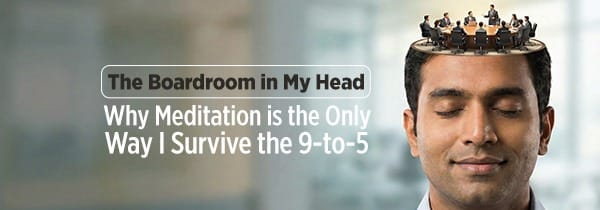
The Boardroom in My Head: Why Meditation is the Only Way I Survive the 9-to-5

By Psychology

The fluorescent lights in the office didn’t flicker, but my brain did.

It was 3:00 PM on a Tuesday. I had sixteen tabs open on my browser, a half-eaten salad on my desk, and a Slack notification that felt like a physical punch to the gut. My heart was racing, not because I had run a marathon but because I was sitting perfectly still, drowning in a sea of “what-ifs.”

What if I miss this deadline? What if I’m not as good at this as they think? What if this burnout is permanent?

For years, I wore my stress like a badge of honor. I thought “hustle culture” meant having a mind that never shuts up. I thought being a “high-performing professional” meant being a 24/7 disaster of caffeine and cortisol.

I didn’t need a vacation. I needed a new brain. And that’s when I stopped trying to outrun my thoughts and started sitting with them.

The Architecture of the “Busy” Brain

As professionals, we are paid to think. But we are rarely taught how to manage the machinery we use to do that thinking.

Recent neurobiological research has shown that chronic workplace stress actually reshapes our anatomy. When we stay in “survival mode,” our amygdala—the brain’s primitive alarm system—gets enlarged and hyper-reactive. It’s like having a smoke detector that goes off every time you light a candle.

Meanwhile, the Prefrontal Cortex (PFC)—the part of the brain responsible for logic, focus, and executive decision-making—starts to thin out.

In plain English: Stress makes us reactive and dim-witted. Meditation makes us intentional and sharp.

The Day the Wipers Turned On

I used to think meditation was for people who had “nothing better to do.” I thought it was about floating on a cloud of Zen.

The first time I tried it, I lasted exactly 90 seconds. My mind felt like a room full of toddlers who had just discovered espresso. I felt itchy, annoyed, and even more stressed than before.

But then, I read a study from Harvard University that changed my perspective. Researchers found that just eight weeks of consistent mindfulness practice actually increased gray-matter density in the hippocampus (the part of the brain responsible for learning and memory) and decreased it in the amygdala.

I realized meditation isn’t about “emptying the mind.” It’s about weightlifting for the brain. Every time your mind wanders to an email, and you gently bring it back to your breath, you are doing a “rep.” You are physically strengthening the neural pathways that allow you to stay calm when a client is screaming or a project is failing.

Why Professionals Need This “Software Update”

Meditation isn’t a “soft skill.” It is a hard-edged competitive advantage. Here is what actually happens to your brain when you stop “doing” and start “being”:

  • The “Gap” Created: Meditation creates a split-second gap between a stimulus (a rude comment) and your response. In that gap lies your professional power.
  • Default Mode Network (DMN) Quietening: Science calls it the DMN; I call it the “Monkey Mind.” It’s the part of the brain that rants about the past and worries about the future. Meditation dials the volume down on this chatter.
  • Cortisol Regulation: Recent 2024 data suggests that even 10 minutes of mindfulness can significantly lower blood cortisol levels, preventing the “afternoon crash” that plagues most office workers.

It’s Not About the Mat; It’s About the Meeting

I don’t meditate to be good at meditating. I meditate to be good at my life.

The personal touch came for me when I realized that my family deserved the “meditated version” of me, not the “burnt-out professional” version. I was tired of giving my best energy to a spreadsheet and my worst energy to the people I love.

Now, I don’t wait for a “quiet space.” I meditate in the parking lot before I walk into the office. I meditate for three minutes between back-to-back Zoom calls.

I’m not “clearing my mind.” I’m cleaning the lens. When you clean the lens, you see that the “urgent” email isn’t actually an emergency. You see that your colleague’s bad mood isn’t about you. You see that you are not your thoughts—you are the person observing them.

How to Start (For the Skeptical Professional)

If you feel like you don’t have time to meditate, you are exactly the person who needs it most. Here is how to start without the fluff:

  • The “Two-Minute Drill”: Don’t aim for 20 minutes. Aim for two. Sit in your office chair, feet flat on the floor, and just notice the sensation of your breath in your nostrils. That’s it.
  • The “Anchor” Technique: Pick a recurring professional trigger—like the sound of a notification or opening your laptop. Use that as a cue to take three deep, conscious breaths.
  • Drop the Judgment: Your mind will wander. That is what minds do. The goal isn’t to stop the thoughts; it’s to stop being bullied by them.
  • Focus on “Grace over Greatness”: Some days your meditation will feel peaceful. Other days it will feel like a cage match with your own ego. Both sessions are equally effective for your brain.

The Conclusion: Your Brain Is Your Best Asset. Invest in It.

We spend thousands of dollars on professional development, degrees, and technology. Yet, we ignore the very organ that processes every single bit of that information.

You wouldn’t expect your laptop to run for five years without a reboot. Why do you expect your brain to?

The boardroom in your head doesn’t have to be a place of chaos. It can be a place of clarity. But you have to be the one to step in and take the chair.

The 60-Second Challenge

I’m not asking you to buy a cushion or chant. I’m asking you to protect your most valuable resource.

Right now—before you click away to the next tab—close your eyes. Take one deep breath in through your nose, hold it for three seconds, and exhale slowly through your mouth. Notice the weight of your body in your chair.

That feeling? That tiny spark of stillness? That is the beginning of a better brain.

Will you give yourself ten minutes of stillness tomorrow morning, or will you let the fog win again? Your move.

BA Psychology Admission in Bangalore

The Mind in 2026: Beyond the Therapy Couch

By Psychology

For decades, the image of psychology was defined by a quiet room and a comfortable sofa. But as we move through 2026, the field is undergoing a radical transformation. Driven by rapid technological shifts and a move toward “bottom-up” healing, the way we understand and treat the human mind is becoming more integrated, accessible, and embodied than ever before. This evolution is bridging the gap between our digital lives and our biological realities.

One of the most visible shifts is the integration of Artificial Intelligence as a “strategic partner” in mental wellness. We have moved past simple chatbots; today, agentic AI tools assist clinicians by analyzing session patterns and summarizing notes, allowing therapists to focus entirely on the human connection. For the individual, these tools provide “Continuous Care,” offering real-time cognitive exercises and support during the high-stress moments between weekly appointments, effectively democratizing access to psychological tools that were once gated behind expensive hourly rates.

Simultaneously, we are witnessing a significant move away from purely “talk-based” interventions. The trend in 2026 is centered on Somatic Psychology, fueled by research showing that trauma and chronic stress are often stored in the body’s nervous system rather than just our conscious thoughts. This has brought “bottom-up” therapies into the mainstream, where practitioners focus on regulating the vagus nerve and the autonomic nervous system. By using techniques like EMDR and specialized breathwork, people are learning to quiet their “fight-or-flight” responses physically, proving that healing the mind often begins with calming the body.

Finally, the boundary between technology and biology continues to blur through the use of Virtual Reality and neuroplasticity-based training. Virtual Reality Exposure Therapy (VRET) has become the gold standard for treating PTSD and phobias, providing a safe, controlled environment for patients to rewire their fear responses. As we gain a deeper understanding of the brain’s ability to reorganize itself, these digital interventions are being used not just to treat illness but to optimize cognitive performance. In 2026, psychology is no longer just a medical practice—it is a holistic pursuit of thriving in an increasingly complex world.

Best UG College in Bangalore

How emotional intelligence affects leadership effectiveness

By General, Psychology

These days, emotional intelligence (EI) has become highly critical to defining leadership effectiveness in the workplace. Unlike technical skill or position power, EI is about understanding, managing, and using emotions to build stronger relationship, manage conflict, and make better decision. Leaders with high emotional intelligence establish an environment where trust and collaboration flourish for lasting organizational success.

Self-awareness—one of the important elements of Emotional Intelligence (EI)—enables leaders to recognize their emotional triggers and how these influence their actions. Leaders make decisions based on their awareness of their own strengths and weaknesses. Self-regulation, which comes with self-awareness, controls the way leaders act and stay after even under pressure. It helps to trust each other because they are calm and consistent.

Having empathy is another component of emotional intelligence. Empathy means having the ability to identify with and understand another person’s feelings and experiences. Leaders who have empathy promote deep relationships and build a culture of psychological safety by which their members feel heard. It enhances communication, which increases the engagement and satisfaction at the work of the employees.

Communicating effectively, resolving conflict, and working together are social skills that are part of emotional intelligence. These skills help leaders influence the behavior of others while working towards common goals. In addition, leaders with emotional intelligence know people’s strengths and align them with the organizational goals to build teams.

Studies show organizations with leaders displaying emotional intelligence experience lower turnover, better morale, and higher overall performance. With growing diversity in the workplace, what will help leaders tackle challenges and embrace opportunities for growth is EI.

As companies keep changing, EI is becoming increasingly valuable in leadership today. By working on their emotional intelligence, leaders can gain effectiveness and create an organization that thrives, which is crucial for success. In today’s world, emotional intelligence is the essential quality that makes a leader effective and adaptable at work.

MSc Psychology in Bangalore

Impact of Cultural Differences on Psychology

By General, Psychology

Culture plays a vital role in shaping human psychology, thus creating behavioral, cognitive, or emotional differences among individuals. Psychology, embracing this global perspective, needs to understand the effect of culture on mental processes.

Culture offers the context by which individuals view their world. It defines the values, beliefs, and norms that will guide all actions. For instance, in many parts of Asia, collectivist cultures place emphasis on group harmony, family ties, and community welfare. In contrast, individualistic cultures in Western countries focus on personal achievement, independence, and self-expression. The cultural context will influence approaches to problem-solving, communication, and emotional regulation. People from collectivist cultures tend to suppress personal desires for the sake of group harmony, while those from individualistic cultures tend to prioritize personal fulfillment.

Culture also plays a part in mental illness. Conceptions of mental disorders and their signs also vary between cultures. In a way, where Western cultures can pathologize mental health illnesses, others place the etiology on spiritual and social planes. For example, where emotional displays are considered improper, depression could be portrayed in terms of bodily distress such as headache or general weakness. In such instances, diagnostic and treatment procedures have to be culture specific.

Cross-cultural psychology, which would explain the nuances of such variance, cautions against ethnocentrism when it comes to psychological science. Most of psychology’s research has been undertaken in WEIRD societies; therefore, theories devised from such works cannot be quite universally applicable, and Maslow’s hierarchy of needs may hardly strike a cord in a place that puts community and dependency over self-realization.

Cultural competence is essential for effective psychological practice. Psychologists and researchers must consider clients’ backgrounds, including language, culture, traditions, and societal values. This understanding fosters trust and improves treatment outcomes, minimizing misdiagnosis.

In an interconnected world, the acknowledgment and respect of cultural differences are very important for advancing psychological research and practice. By embracing diversity, psychologists can develop inclusive frameworks that ensure equitable and accessible mental health care for all. Culture is not just a backdrop; it is a central element shaping human experience, and recognition of this is key to understanding the complexities of the human mind.

BA Psychology Admission in Bangalore

THE ROLE OF NEUROTRANSMITTER IN EMOTIONAL REGULATION

By General, Psychology

Regulating or controlling emotions is important in survival; a lack of emotion regulation has an effect on both psychological and physical well-being, which can lead to anxiety, sadness, depression, stress, poor interpersonal relationships, and also in professional failure. Neurotransmitters play an important role in regulating emotions.

A neurotransmitter is a bodily chemical messenger that transmits signals between the neurons, glands, and muscles. Through inhibitory and excitatory neural activation, the neurotransmitter is released from a neuron to the presynaptic cleft and diffuses to the postsynaptic cleft. Postsynaptic neurons receive the signal and respond. Neurotransmitters have various roles along with mood regulation and reaction. Different neurotransmitters and their variety of roles not only play an individual’s emotion regulation but also a balanced interaction of multiple neurotransmitters. 

Serotonin, known as a pleasure neurotransmitter, plays an effective role in regulating mood, appetite, anxiety, and sleep. Irritability, depression, and anxiety are associated with low levels of serotonin in neurons. Antidepressants work by increasing the serotonin level in the brain to regulate the emotions. 

Dopamine is related to fear, anger, rewards, and feelings of pleasure. A high level of dopamine in the brain leads to schizophrenia. Dopamine often works with serotonin to balance emotions and play an important role in motivation. 

Gamma-aminobutyric acid helps to reduce anxiety and enhance relaxation. Low levels of GABA activity lead to insomnia and anxiety disorders. Glutamate is another neurotransmitter that regulates overall brain functions like learning and memory. The excess level of glutamate activity can lead to depression and other mood-related disorders. Both maintain a balance between excitation and relaxation. 

Endorphins are neurotransmitters known as natural painkillers that contribute to a sense of happiness and psychological well-being and are released during laughter and exercise. 

Norepinephrine contributes to regulating arousal, alertness, and attention. Has played both hormone and neurotransmitter messengers. Lack of norepinephrine is associated with symptoms like depression. 

Neurotransmitters play a pivotal role in defining the intrinsic process of emotion regulation. Each neurotransmitter conveys a supreme role, from serotonin’s stabilizing effect on mood to GABA’s relaxing properties and the effects of dopamine on motivation and reward. Ongoing advanced study and neuroscience research continue to uncover exclusive biochemical pathways, which can lead to innovative treatments and therapies to enhance emotional well-being. 

Close Menu
Privacy Overview

The ST PAULS COLLEGE Website uses cookies so that we can provide you with the best user experience possible. Cookie information is stored in your browser and performs functions such as recognising you when you return to our website and helping our team to understand which sections of the website you find most interesting and useful.

Read more about our Privacy Policy here