Admission Enquiry

Skip to main content
search
Tag

Best Psychology Course in Bangalore

At ST PAULS COLLEGE, education is not limited to classrooms and examinations. It is also about shaping character. When empathy and understanding become part of learning, students grow into resilient, compassionate individuals ready to contribute meaningfully to society.

The Psychology of Forgiveness: Letting Go of Grudges

By Psychology

Forgiveness is often misunderstood as weakness. In psychology, however, forgiveness is a powerful emotional skill, the ability to release resentment, heal from hurt, and move forward with inner peace. Letting go of grudges does not erase pain, but it frees the heart from carrying it forever.

A story often shared among students at ST PAULS COLLEGE speaks quietly to this truth. A young student, burdened by personal struggles, began skipping classes and missed an important submission. When confronted, fear turned into anger, and harsh words were exchanged. The classroom fell silent. Many expected strict punishment.

Instead, the teacher paused. Seeing not defiance but distress, she chose compassion over reaction. She listened. She forgave. More importantly, she guided the student back with patience and trust. That moment changed something. The student did not just improve academically; he learned what kindness in authority looks like.

Psychology explains that forgiveness reduces emotional stress, lowers anger, and supports mental well-being (Worthington & Scherer, 2004; Enright & Fitzgibbons, 2000). It helps individuals rebuild relationships and develop emotional maturity (Wade, Hoyt, Kidwell, & Worthington, 2014). In educational spaces, forgiveness fosters safety, where students feel seen, supported, and encouraged to grow beyond mistakes (Roffey, 2012).

At ST PAULS COLLEGE, education is not limited to classrooms and examinations. It is also about shaping character. When empathy and understanding become part of learning, students grow into resilient, compassionate individuals ready to contribute meaningfully to society.

Forgiveness, after all, is not about forgetting; it is about choosing peace over pain.

Choosing the right college is about more than degrees; it is about becoming the kind of person who makes a positive difference. At ST PAULS COLLEGE, education goes hand in hand with compassion, shaping minds that care and act for a better society.

The Psychology of Altruism: Why We Help Others

By Psychology

Why do people help strangers, donate time, or stand up for someone in need, often without expecting anything in return?

This simple yet powerful question lies at the heart of the psychology of altruism. Altruism refers to selfless concern for the well-being of others, and it is one of the most inspiring aspects of human behaviour.

Psychologists explain altruism through multiple perspectives (Penner, Dovidio, Piliavin, & Schroeder, 2005). From a biological viewpoint, helping behaviour strengthens social bonds and survival within communities (Wilson, 2012). Social psychology highlights the role of empathy: when we truly understand another person’s pain, we are more likely to act (Batson, 2011). Our upbringing, cultural values, and educational environment also shape how and when we choose to help others (Eisenberg, Spinrad, & Knafo-Noam, 2015).

In today’s fast-paced and often competitive world, altruism reminds us of the importance of compassion, cooperation, and social responsibility. Acts of kindness, be it big or small, contribute to mental well-being, foster meaningful relationships, and create healthier communities. Research even shows that helping others can reduce stress and increase life satisfaction.

At ST PAULS COLLEGE, students are encouraged not only to pursue academic excellence but also to grow as socially responsible individuals. Through community outreach, value-based education, and student-led initiatives, the institution nurtures empathy, leadership, and ethical awareness. This holistic approach prepares learners to succeed professionally while remaining grounded in human values.

Choosing the right college is about more than degrees; it is about becoming the kind of person who makes a positive difference. At ST PAULS COLLEGE, education goes hand in hand with compassion, shaping minds that care and act for a better society.


MSc Psychology in Bangalore

The Windshield is Dirty Again: Why Movement is My Only Strategy for Sanity

By Psychology

the windshield wipers in a rainstorm.

Ten minutes in, my stress started. The Windshield is Dirty Again: Why Movement Keeps Me Sane

The alarm screamed at 6:00 AM, but I just lay there. Couldn’t move. From the outside, my life probably looks neat and tidy—good job, clean apartment, routines that run like clockwork. But that morning, the air in my room felt thick. Not tired, not really. I’d slept. It was my mind that felt heavy, like someone had pulled a gray sheet over everything. That’s what happens when you keep “performing” long after your energy runs out.

I stared at the ceiling, totally stuck under the weight of my own thoughts. The emails piling up. A presentation due by noon. That constant, buzzing anxiety telling me I’m not keeping up, even though I’m grinding through 10-hour days.

Honestly, I didn’t care about “working out.” I didn’t care about being healthier or stronger. I just wanted the noise to stop.

The High-Performance Lie

We’re trained to see exercise as either a luxury or some vain project. We hear about those CEOs who get up at 4:00 AM to run marathons and think, “Yeah, right. I’m not that disciplined.” But on that morning, it hit me: discipline isn’t about perfect abs. It’s about surviving.

I didn’t pull on slick gym gear or mess with my watch. I grabbed old sweatpants and stepped outside. Cold air slapped my face, and for a second, that fog lifted. I started walking. Not a power walk. Not even a brisk walk. I just moved.

Why My Mind Needs My Body to Move

Most of us live in our heads. We solve problems, juggle teams, plan, predict, perform. Our bodies? They’re just there to carry our brains from one Zoom call to the next. But your brain’s not a separate gadget. It’s tied in with everything else. When I started walking that day, it felt like flicking on to settle. I felt a small flicker of accomplishment. Not because I’d crushed a goal, but because I’d managed to push through the resistance and actually move. My shoes crunching on the sidewalk gave my mind something to hold onto. Pulled me out of my anxious future and dropped me into the present.

I call it “cleaning the windshield.” Life throws up so much dirt—deadlines, tough conversations, constant pings and dings. If you don’t turn on the wipers, you lose sight of the road. Movement is the wiper fluid.

A Real Guide to Messy Movement

If you’re reading this and the air around you feels heavy, stop treating movement like another box to check. You don’t need another chore. You need a pressure release.

Here’s how I sneak movement into my life when it feels impossible:

Lower the Bar. Forget 60-minute sweat sessions. If you can stretch for five minutes at your desk, do that. Five is so much better than zero.

Focus on How You’ll Feel After. Don’t dwell on the effort. Think about that sweet spot twenty minutes after—when your breathing slows down, and the static fades.

Make Movement a Boundary. Use your walk or gym time as a no-work zone. No industry podcasts. No scrolling Slack between sets. Just you and your breath.

Dress However You Want. If gym clothes feel like too much hassle, move in what you’ve got. Your brain doesn’t care if you’re in sweatpants or slacks—just move.

Choose Green Over Gray. If you can, get outside. There’s something about trees and sky that a treadmill can’t give you.

Wiping the Glass Every Day

I’m learning that I don’t move because I want to change my body. I move to change how I see. When I got back from that first walk, the fog didn’t totally clear. The emails waited. The deadlines still loomed. But I could see them now. I wasn’t sinking anymore; I was swimming.

We like to brag about our mental toughness. But real toughness is knowing when your brain needs your body’s help.

A Little Challenge for Your Sanity

You’ve spent years putting work, family, and your online life first. Maybe it’s time to clear your own windshield.

Here’s my challenge: try a “10-Minute Reset.” Don’t wait for Monday or the perfect moment. Just set a timer for ten minutes. Leave your phone. Step outside. Walk. No pressure, no tracking, no goals. Just keep moving until the wipers come on. Your mind—and your career—will thank you for it.

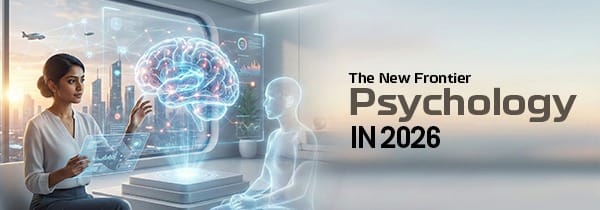
As we move deeper into 2026, the field of psychology is rapidly expanding its focus from the individual mind to the global environment. One of the most significant emerging trends is the rise of Eco-Psychology and the clinical treatment of "eco-anxiety."

The New Frontier: Psychology in 2026

By Psychology

As we move deeper into 2026, the field of psychology is rapidly expanding its focus from the individual mind to the global environment. One of the most significant emerging trends is the rise of Eco-Psychology and the clinical treatment of “eco-anxiety.” With environmental shifts becoming a daily reality, psychologists are increasingly helping patients process climate-related grief and anxiety. This has led to the mainstreaming of “Nature-Based Therapy” or forest bathing, where the natural world is not just a backdrop for a walk but a primary tool used to regulate the nervous system and restore cognitive focus.

Beyond our environment, the way we view the human brain itself is shifting toward a model of Neuro-Inclusion. In 2026, there is a powerful movement away from seeing conditions like ADHD, Autism, or Dyslexia as “deficits” to be cured. Instead, the psychological community is embracing “Neuro-Diversity” as a standard for both clinical practice and workplace design. We are seeing a surge in “body-hacking” and sensory-friendly interventions that allow neurodivergent individuals to thrive in their unique cognitive styles. This trend is supported by new wearable EEG headsets and neurofeedback tools that help individuals monitor their own brainwave activity in real time, moving mental health care into the palm of the patient’s hand.

Finally, the concept of “Continuous Care” is replacing the traditional, isolated 50-minute therapy session. In this always-on reality, psychology has become a proactive lifestyle rather than a reactive treatment. Integrated care models now see psychologists working directly alongside primary care doctors and even AI “co-therapists” to provide a seamless support network. This holistic approach recognizes that mental wellness is inextricably linked to our physical health, our digital habits, and our social equity. In 2026, the goal of psychology has evolved: it is no longer just about fixing what is broken, but about designing a world where every type of mind can flourish.

The landscape of clinical psychology is currently undergoing a massive shift toward Precision Mental Health—an approach that treats the individual’s specific biology and environment rather than just their general diagnosis.

The Precision Revolution: Why One-Size-Fits-All Therapy is Fading

By Psychology

The landscape of clinical psychology is currently undergoing a massive shift toward Precision Mental Health—an approach that treats the individual’s specific biology and environment rather than just their general diagnosis. For decades, the field relied heavily on a “wait and see” model where a patient would describe symptoms and a clinician would offer a standard treatment, such as Cognitive Behavioral Therapy, hoping it would eventually stick. Today, however, we are moving away from broad labels and “trial and error” methods. A diagnosis like “Major Depressive Disorder” is now seen merely as a starting point. By investigating the gut-brain axis and neuro-inflammation, clinicians are discovering that for some, mental distress is a biological response to physical inflammation, while for others, it is a purely cognitive habit.

This data-driven approach is further supported by the rise of digital phenotyping, which allows clinicians to analyze objective data from sleep patterns and social interactions. This information helps determine the specific subtype of an illness a patient is experiencing, allowing the therapist to skip the guesswork and move straight to the intervention that matches the patient’s unique internal “signature.” Beyond just tracking data, clinical research is also refining how we treat anxiety and trauma through a concept known as Expectancy Violation. It is no longer enough to simply face a fear; modern therapy is most effective when a patient’s specific negative expectations are explicitly disproven during a session. This creates a “neural mismatch” that forces the brain to update its safety protocols, leading to faster and more permanent relief than traditional exposure alone.

Ultimately, this evolution does not replace the human element of therapy; it strengthens it. By utilizing objective data and biological insights, the “clinician of the future” can spend less time on administrative updates and more time on the therapeutic alliance. When a therapist already understands the physical and digital patterns of a patient’s week, they can dive immediately into the core emotional issues. This creates a clinical experience that is more efficient, targeted, and deeply personal, ensuring that mental healthcare is as precise and proactive as modern physical medicine.

Top BSc Psychology colleges in Bangalore

The Role of Neurotransmitters in Mood Regulation: Your Brain’s Chemical WhatsApp Group

By Psychology

Ever wondered why some days you feel on top of the world and on others, even your favorite song feels annoying? The answer lies less in your horoscope and more in tiny chemical messengers called neurotransmitters. These chemicals act like your brain’s internal WhatsApp group, constantly sending, receiving, and sometimes misinterpreting messages that shape your mood.

Mood is not just “all in your head”; well, technically it is, but not in the way people mean it. Our emotional ups and downs are largely shaped by neurotransmitters, the brain’s chemical messengers that quietly run the show behind every smile, sigh, and sudden wave of irritation. When these chemicals are in balance, life feels manageable; when they’re not, even small tasks can feel overwhelming.

Neurotransmitters allow neurons to communicate with one another, influencing emotions, motivation, sleep, and stress responses. Among the many neurotransmitters in the brain, a few play a particularly crucial role in mood regulation (Stahl, 2013).

Serotonin is often labelled the “mood stabilizer.” It contributes to feelings of well-being, emotional control, and restful sleep. Research consistently links low serotonin levels with depression and anxiety, which explains why selective serotonin reuptake inhibitors (SSRIs) are commonly prescribed in mood disorders (Cowen & Browning, 2015).

Dopamine, on the other hand, is the brain’s reward and motivation chemical. It helps us experience pleasure and maintain focus. When dopamine levels are low, individuals may feel emotionally flat or unmotivated; when excessively high, it can lead to impulsivity or manic-like symptoms (Grace, 2016). In simple terms, dopamine answers the question, “Why should I even try?”

Norepinephrine plays a key role in alertness and emotional energy. It prepares the brain to respond to stress and challenges. Reduced activity of this neurotransmitter is associated with low energy and depressed mood, while overactivity can contribute to anxiety and restlessness (Moret & Briley, 2011).

Finally, GABA (Gamma-Aminobutyric Acid) acts as the brain’s natural brake system. It calms neural activity and helps regulate anxiety. Low GABA levels are frequently observed in individuals with mood and anxiety disorders, making emotional regulation more difficult (Nemeroff, 2003).

Mood regulation is not governed by a single “happy chemical” but by a delicate balance among multiple neurotransmitters. Genetics, stress, sleep, diet, and life experiences can all disrupt this balance. Understanding this neurochemical foundation helps shift the narrative from blaming oneself to recognizing mood disorders as biologically influenced and treatable conditions.

In short, your brain isn’t dramatic; it’s chemical. And sometimes, it just needs better balance.

MSc Psychology in Bangalore

The Psychology of Lying: Why Do We Lie?

By Psychology

Lying is a common human behavior. From harmless white lies to serious deceit, people of all cultures and ages lie more than they realize. But why do we lie, even when we value honesty? Psychology provides some interesting answers. The Psychological Reasons Behind Lying. One main reason people lie is to protect themselves. Research by psychologist Bella DePaulo shows that people often lie to avoid punishment, embarrassment, or rejection. In her well-known diary studies, participants reported lying in everyday situations, frequently to control how others see them. Another strong motivation is to bond with others. Ironically, lying can help maintain relationships.

Small lies, like giving insincere compliments, are often used to keep the peace and avoid conflict. These are known as prosocial lies, and studies suggest they activate brain areas linked to empathy and emotional control. Cognitive and Emotional Factors Lying is also connected to cognitive load. Neuroscience research using fMRI scans shows that lying takes more mental effort than telling the truth, activating the prefrontal cortex, which is in charge of decision-making. This helps explain why frequent liars may feel mentally drained or inconsistent over time. Emotionally, people lie to safeguard their self-esteem. A 2018 study published in Nature Neuroscience found that lying repeatedly can dull the brain’s emotional response, making dishonesty easier over time. This is known as the slippery slope of deception. Evolutionary and Social Perspectives. From an evolutionary view, lying may have developed as a survival tool to gain advantages, avoid danger, or improve social standing. In today’s world, these instincts remain, even when the risks are low.

Final Thoughts: Understanding why we lie helps us be more aware of our own actions and more understanding of others. While lying is often seen negatively, psychology shows it is closely linked to human emotions, thought processes, and social survival.

Best UG College in Bangalore

HOW CHILDHOOD EXPERIENCES SHAPE ADULT BEHAVIOR

By Psychology

How Childhood Stories Shape Us

Ever catch yourself stressing over a friend’s text or feeling uneasy when someone leaves your message on read? Maybe you just shut down in the middle of an argument, almost without thinking. These reactions aren’t random. They’re leftovers from when we were kids. Every little moment—those family laughs, the chaos, feeling safe or always on edge—they stick. They follow us, shaping the way we connect, think, and feel long after childhoods are over.

Mental Health: The Echo That Lingers

Imagine a kid, heart pounding, desperate for a proud look from a parent. In some families, love feels like something you have to earn. You screw up, and suddenly, it’s like the love vanishes—or at least, that’s how it feels. So you grow up chasing gold stars, terrified to mess up, convinced that mistakes mean losing love.

But when you grow up knowing love won’t disappear, it’s different. You stumble, you fall, but you get back up without thinking your worth is on the line.

Ever notice you get anxious during fights, while your partner stays cool as a cucumber? If your childhood was full of yelling or silent treatments, your body learned young—conflict equals danger. So now, even a little disagreement spikes your heart rate.

Or maybe you cling tight in relationships, always scared they’ll leave. That fear usually comes from love that felt unpredictable when you were small—here one day, gone the next. You learned to hang on, just in case.

People raised with steady, reliable love? They’re usually more trusting. They let people in. They say what they really feel.

Think about the kid who got teased in school. Maybe they learned to blend in, always smoothing things over. As adults, they turn into peacemakers, putting everyone else first. Or the child who had to take care of their siblings because no one else stepped up? They grow up feeling like everything is their responsibility, carrying a weight that never quite goes away.

Back then, these habits kept us safe. Now? They can feel exhausting. They get in the way.

The upside? Your childhood set the stage, but you’re the writer now. Healing is real, and it belongs to you.

Therapy & Self-Reflection: Spotting an old pattern—like shutting down when someone criticizes you—is a brave first step.

Mindfulness: Whether you’re jotting down what sets you off or just sitting quietly, those small pauses help you respond, not just react.

Healthy Relationships: Being with people who see your good sides teaches your brain that safety is possible.

Resilience: Learning boundaries, being kinder to yourself, and picking up new skills help you stand taller, even when old fears show up.

Choosing Growth

Childhood is just the beginning. It’s not the whole story. The stuff you made it through? That can become your superpower. Every time you pause before reacting, choose healthier relationships, or show yourself some kindness, you’re rewriting your story for real.

So, next time you find yourself spiraling over a text, dreading conflict, or slipping into an old habit, stop for a second and ask, “Is this really me, or is this just my childhood showing up?” That little bit of awareness—that’s where everything can start to shift.

BA Psychology Admission in Bangalore

THE IMPACT OF SOCIAL MEDIA ON MENTAL HEALTH

By Psychology

Social media is a platform where people connect, communicate, share ideas, share photos and information, and even share photos and make calls. All these basically connect people. Here, the connection is purely voluntary for the person. There is no compulsion by anyone. The group of people who had the traits where they would shy away from lots of people and situations and feel anxious to face some circumstances, like talking to people face-to-face, making eye contact, and expressing even the most important matters in their lives. All these would make the person a loser in life and also affect their self-esteem and personality as well. The general opinion of people about him would also be negative. For such a community of people came a platform where they could freely express their feelings and emotions and also get some entertainment if they wanted through numerous platforms, and also they got the freedom to talk to their friends and relatives, which served as a ventilator of their loneliness and sadness, and the like. So social media came as a companion to such people. This eliminated anxiety, mild depression, and such neurotic disorders. It acted more as a preventive measure than a cure for a lot of people of all age groups. If anyone were to be in trouble, it would be a call away to get help and a solution. There are a lot of people who have benefited from social media in times of emergency when it came to meeting important people, reaching the hospital, reaching a place on time, sending information in time, and the like.

It has also kept people happy and helped them give themselves some time. The information about children to the parents and about aged parents to the adult children is known 24/7, which has kept everyone peaceful. Keeping away the ill effects of social media, the benefits are so much for us as humans to do with our mental health. Social media has not only connected people, but also it has integrated the mind and served mankind in the required time. Anything in excess is bad; the same is the case with social media as well. Let it be used wisely and not misused

Best Degree College in Bangalore

The Psychology of Altruism: WHY DO WE HELP OTHERS?

By General, Psychology

Helping is an act of kindness. Assisting another person in the task they are primarily interested in; however, this can be executed upon request or voluntarily. Altruism is considered an act of selflessness where an individual chooses to help without expecting anything in return, in whatever form. Being a social animal who lives by the principles of survival of the fittest, the altruistic behavior contrasts with the nature of homosapiens. Yet, the scientific community has various aspects put forward to make the understanding of altruism easier for the layman. 

Kin Selection

Kitayama, in 1994, through research work, demonstrated how humans have an inclination to help those who share or exhibit the slightest genetic similarity with themselves. Evolutionary psychologists suggest that the altruistic tendency is deeply rooted, as the innate behavior to build networks, groups, and socialize relies on the basis of helping and trust. This would help promote group dynamics, reduce unhealthy competition, and foster social balance.

Empathy as a motivator

The empathy-altruism hypothesis explains how empathy becomes the strongest motivator of behavior. C Daniel Batson, father of the above-mentioned hypothesis, delineates the brain’s reward system functioning, explaining how oxytocin and dopamine create a helper’s high. This enables us to feel others’ pain and urges us to relieve them of the same. The principle of reciprocity and responsibility suggests that we help others based on what we may get in return as well as our willingness to help them. Keating and colleagues also discuss another plausibility of why people choose to help. It is simply the vicarious joy of helping others. It makes us feel good about ourselves.

Negative State Relief Model

With a great amount of consensus on all that is discussed above, there are contrasting views. Humans decide to help just to make them feel less burdened by the guilt that they did nothing. The supporters of this model state that empathy is not necessary for helping. Unhappiness drives helping behavior. The slightest disturbance in the psychological equilibrium pushes an individual to behave in order to attain balance. Irrespective of the ability to feel empathy, the innate tendency to feel hedonic does the job in these cases. 

If prosocial behavior is driven by internal gratification or external appreciation as motivating factors, does altruism exist in its true sense?

Close Menu
Privacy Overview

The ST PAULS COLLEGE Website uses cookies so that we can provide you with the best user experience possible. Cookie information is stored in your browser and performs functions such as recognising you when you return to our website and helping our team to understand which sections of the website you find most interesting and useful.

Read more about our Privacy Policy here