search
Category

Software

Artificial Intelligence (AI) is the buzzword. Just as human actions are evaluated against a set of standards, a machine that simulates human intelligence must also undergo the same, but stricter, quality check. Modern AI systems excel in many areas, but one area that is often overlooked is ethics.

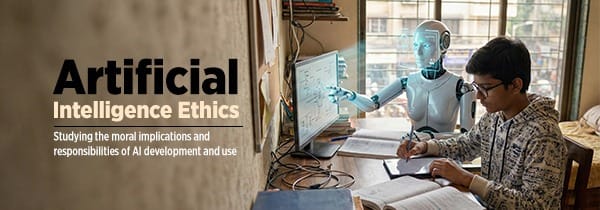
Artificial Intelligence Ethics: Studying the moral implications and responsibilities of AI development and use

By AI, Software, Technology

Artificial Intelligence (AI) is the buzzword. Just as human actions are evaluated against a set of standards, a machine that simulates human intelligence must also undergo the same, but stricter, quality check. Modern AI systems excel in many areas, but one area that is often overlooked is ethics.

Ethics is a system of moral principles that includes ideas about right and wrong, and how people should (or should not) behave in general and specific cases. Why should a machine be ethical? Let’s look at some interesting stories where it wasn’t:

  1. “Ghiblification” (2025) – It was an unconsented training on the copyrighted art; it was a contradiction of Hayao Miyazaki’s philosophy, where he has described art generated by AI as an insult to the human race.
  2. Amazon’s Biased Hiring Tool (2014/2018): Amazon had to scrap an AI recruiting tool that taught itself to prefer male candidates, as it was trained on resumes submitted to the company over 10 years, most of which came from men.

These examples explain why ethics are important for AI. Let’s explore the moral implications of AI:

  • Biased AI: AI systems can inherit human biases from their training data, which can lead to wrong interpretations and results.
  • AI in law: AI-based decisions may lack transparency, neutrality, and accountability, potentially resulting in discrimination.
  • Privacy Concerns: AI uses a huge amount of data to train, and most of it is personal, high-security data.
  • Accountability: When AI makes a wrong move, who is responsible – the developer or AI?
  • Job and Economic Impact: AI-driven automation can widen economic inequality by replacing human jobs with machines.

Given these concerns, we know why AI must be ethical and why it is a serious concern; several government and non-government organizations have proposed frameworks and guidelines.

  1. The European Union (EU) Artificial Intelligence Act is a landmark regulation that sets standards for how AI systems must be developed, deployed, and used across all EU member states.
  2. UNESCO’s Global Recommendation on the Ethics of AI, which encourages multi-stakeholders’ involvement to come up with rules and regulations.
  3. OECD’s AI principles, which focus on human – centred values and fairness, transparency, and explainability
  4. IEEE Global Initiative on Ethics of Autonomous and Intelligent Systems -Technical standards and ethical frameworks for AI developers.

In conclusion, efforts have been made to make AI ethical and responsible, and they must continue proactively. As the saying goes, “Prevention is better than cure.” Establishing strong ethical standards for AI is not optional—it is necessary to ensure technology benefits humanity without causing harm.

Leading UGPG college in Bangalore

Ensuring That Software Meets Specified Requirements and Is Free of Defects

By Software, Technology

Introduction

In this high-tech society, software is applied in every area of our lives. Therefore, software needs to meet the criteria and should be free of bugs for its users to get any benefits out of it as well as for proper working. Software requirements are requirements of the software product that should meet the specs. The software’s features during the beginning of the development process, including usability, security, performance, and functionality, are specified in these specs. Quality assurance: error prevention

Quality assurance tries to introduce quality in the process of developing software. It does not search for faults. It uses the best practices prevalent in the industry along with relevant standards.

It is not fault-detecting in nature. Instead, it refers to the optimal best practices and industry standards used.

Requirements have been well documented and well-recorded requirements; code review and audit take place frequently.

Why software without flaws is important

  1. Increased Customer Satisfaction: A software that produces trustworthy and lovable software where the trust will be built from that dependable one.
  2. Cost Savings: Money saved can be obtained where problems are identified before the products hit the marketplace.
  3. Reputation: High-quality software will give a good reputation to the business.
  4. Compliance: In the financial and healthcare sectors, compliance with industry standards is crucial.

How to develop software without flaws

These processes reduce errors and make sure the final product is useful for the users.

  1. Early test
  2. Multi-Browser Testing
  3. Multiple Device Tests
  4. Automation Testing Improvement
  5. Use of CI/CD Pipelines
  6. Clear Communication
  7. Risk Registry
  8. Design a Quality Management Plan
  9. Utilize Exploratory and Ad Hoc Testing
  10. Produce good-quality bug reports

Conclusion

Software must have specific requirements and be error-free and valuable to end-users for it to ensure that corporate success happens through integrating proactive QA with robust testing.

Close Menu
Privacy Overview

The ST PAULS COLLEGE Website uses cookies so that we can provide you with the best user experience possible. Cookie information is stored in your browser and performs functions such as recognising you when you return to our website and helping our team to understand which sections of the website you find most interesting and useful.

Read more about our Privacy Policy here