Today, we are living in a time where technology has become a natural part of our daily lives. By 2025, Machine Learning (ML) is no longer just a popular term or experimental idea. It is now working silently in the background of many systems we use every day. It helps doctors notice health problems early, supports companies in managing supply chains, and assists decision-making even before problems appear.
At its core, Machine Learning has changed how computers work with humans. Earlier, computers needed exact instructions for every small task. Now, instead of giving step-by-step commands, we allow machines to learn from examples, similar to how humans learn from experience.
From Fixed Instructions to Learning from Data
In the past, software programs depended completely on rules written by humans. If we wanted a computer to recognize a cat, we had to describe everything in detail—ears, eyes, shape, and size. This method was slow and failed easily if the image looked slightly different.
Machine Learning introduced a smarter approach. Instead of defining rules, we show the system many examples. The computer studies these examples and finds patterns on its own. It does not memorize instructions; it learns how likely something is to be true. This is like the difference between memorizing answers and actually understanding a topic.
Different types Machines Learning
Machines can learn in different ways, depending on the problem they need to solve:
Supervised Learning
In this method, the machine learns using data that already has correct answers. It is similar to a student practicing with solved questions. This approach is commonly used in face recognition, email spam detection, and medical image analysis.
Unsupervised Learning
Here, the machine is given data without any labels. It tries to find patterns or groups by itself. Banks use this method to detect unusual spending behavior, which may indicate fraud.
Reinforcement Learning
This learning style is based on trial and error. The system performs actions and receives rewards for correct actions and penalties for wrong ones. Over time, it learns the best way to reach its goal. This approach is used in self-driving cars, robotics, and game-playing AI.
Understanding Deep Learning
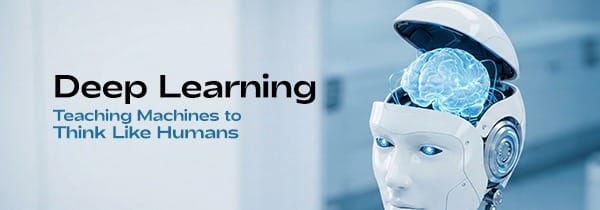
Deep Learning is a part of Machine Learning inspired by how the human brain works. It uses multiple layers called neural networks.
The first layers detect simple things like lines and edges. The middle layers understand shapes and textures. The final layers combine everything to recognize complex information such as objects or meaning. Because of this layered structure, deep learning models can understand context instead of just numbers.
The Effort Behind Smart Systems
Although Machine Learning appears impressive, most of the work happens behind the scenes. A large amount of time is spent preparing and cleaning data. If the data is incorrect or biased, the results will also be unreliable.
Another challenge is overfitting, where the model performs very well on training data but fails when it sees new data. Engineers carefully design models to avoid this problem so that systems work well in real-world situations.
Transparency and Ethical Concerns
As Machine Learning models become more complex, it becomes harder to understand how they make decisions. This is known as the black box problem. In important fields like healthcare or law, decisions must be explained clearly.
To address this, researchers are developing Explainable AI, which helps humans understand why a model made a particular decision. There is also concern about bias, since machines learn from human-created data and may inherit unfair patterns. Ensuring fairness and responsibility is an important part of modern AI research.
Conclusion: Humans and Machines Working Together
Machine Learning is moving toward systems that can handle a wide range of tasks instead of only one specific job. Rather than replacing humans, these systems are designed to support us.
The real goal of Machine Learning is partnership. Machines handle complex data and patterns, while humans focus on creativity, values, and decision-making. Together, this collaboration can lead to better solutions and a smarter future.